Nearly 300 girls from Merseyside were sent to work in a Yorkshire textile mill in the late 19th century, and one of them later became connected to an Everton legend. The girls, known as the Wainstalls Waifs, were recruited by the firm I. & I. Calvert after a shortage of child workers in the UK.
After initially working at Brownlow Hill workhouse in Liverpool, hundreds of girls, many of whom were orphans or financially unstable, were sent to Kirkdale Industrial School before being moved 60 miles north to Wainstalls, near Halifax, to work for the company.
Life in the mill
Kim Pearson, a member of the Wainstalls Community Action Group, has researched the girls' experiences. She told the ECHO: "The girls were part-timers, like all the local children were [who worked at the factory]. So they went to school half of the day with the local children, and the rest of the day they worked in the mill. They did that until they were 13, and then they went full-time in the mill."

She added: "They were doing exactly the same jobs as the local children, and they obviously socialized with the local children in their free time. They worked Saturdays until two o'clock, but they had Saturday afternoon, and some of Sunday free because they had to go to chapel."
Pearson noted that the girls received work clothes and Sunday best, including leather boots and a straw bonnet, and there was a purchase of 32 umbrellas in the cash registers for Calverts. She said: "There's a lot of evidence that the girls were very much looked after. I have not as yet found anything to suggest otherwise."
An incident at the mill
In one instance, Jonathan Calvert, the owner of I. & I. Calvert, defended a worker after an incident. Pearson said: "There's one instance when one of the overlookers in the mill assaulted one of the girls by hitting her. And he was taken to court. Now, she didn't take him to court; it was Jonathan Calvert who took him to court, and the man was sentenced to three months hard labour."
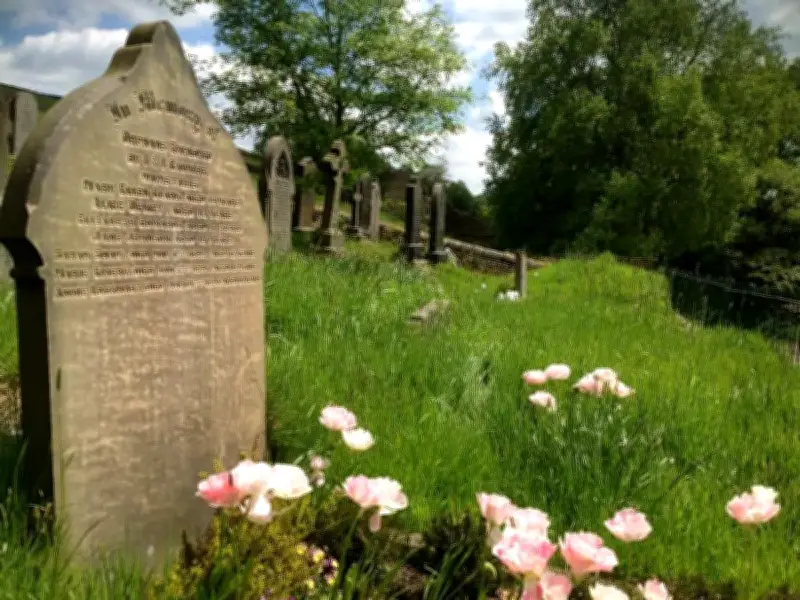
A grave site for seven of the girls in Wainstalls' Luddenden Dean valley has caused speculation that some may have died through mistreatment. Pearson said: "When I first started researching, the locals all told me that the girls were all dragged through machinery or beaten or starved or God knows what. In fact, no, they all died in bed of tuberculosis, attended by a doctor, paid for by Calvert."
She added: "If you stand on the road, there's the railings and the grave's there. It's a big stone, ornately carved, and Calvert's name is on it. So in my mind, somebody who feels in any way culpable for the girls' dying wouldn't have done that. He could have buried them at the back of the graveyard if he'd wanted. He was the most important person in the village, so that wouldn't have been difficult, but he didn't."
Connections to Everton
As the girls grew older, many remained in the village or nearby Halifax and started families, while some returned to Liverpool. One girl, Kate Thompson, went back to Liverpool and had a daughter who married Everton legend Dixie Dean.
Pearson is now working to establish two permanent Wainstalls Waifs Walks. She said: "People will visit various locations around the village, where the girls either worked or went to school or the chapels where they may have worshipped, the orphanages where they lived, which have now gone back to being houses."
She added: "It's just for people to get an atmosphere of the village and where it is. We're using QR codes, because it'll be a narrated walk, and then there's also some lecterns with the story. We're hoping to get some of the children from the local school to do some of the narrating, and we want some of the descendants to do some narrating as well. The girls will never be forgotten. That's what I want to really make sure of."