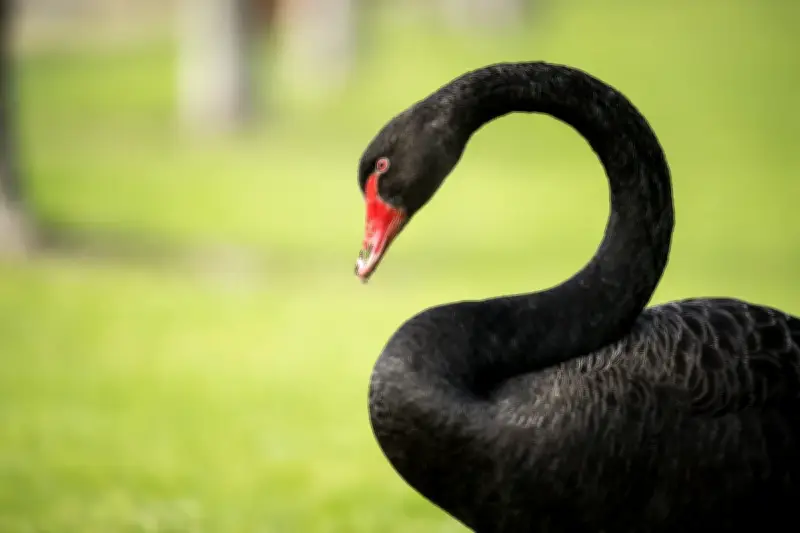
Western Australia's black swans, the state's bird emblem, are at 'very high risk' of infection from the H5N1 bird flu virus, according to a commonwealth national risk assessment. Experts warn the species could suffer 'significant mortality' once the virus reaches their populations.
The black swan is considered an 'indicator species' for the virus because infected birds are more likely to die than survive, according to University of Queensland virologist Kirsty Short. 'If avian influenza gets into a place where there are black swans … then I think we will see swan mortality and if there's a significant number of swans, significant mortality,' she said.
Vulnerability and risk
Unlike many birds, black swans lack a key immune protein involved in recognising viral infections, a difference that may leave them vulnerable to a killer inflammatory response. The species has been ranked as 'very high risk' of becoming infected with the virus, according to the commonwealth national risk assessment.

Experts don't yet know how black swans will respond to living with a virus that, once established, is expected to circulate and evolve in wild bird populations.
Potential to lose entire populations
Black swans live in both coastal and inland freshwater areas and can form large colonies when breeding. An infected bird could cause an entire colony to die out, according to ornithologist Floyd Holmes from Phoenix Environmental Sciences.
'It is not likely to wipe out all of the swans, but for any local groups of swans, particularly in the south-west, that all congregate and breed in a single place, the potential to just lose that entire population all at once is definitely there,' Holmes said. 'It would be pretty devastating for that local area.'
South Australia, where the virus was first reported, has already reported three mass mortality events involving more than 1,000 greater crested terns. Holmes said the public is also more likely to notice the impacts on black swans because the birds are so large and distinctive.
Vaccination efforts
Nine weeks after a migratory bird brought H5N1 to WA shores – and five years after this variant of the virus reached North America – the WA government says it is now testing the vaccine in five endangered black cockatoos at Perth zoo. 'The feasibility of vaccination in black swans is being explored,' WA environment minister Matthew Swinbourn said. 'This is just one tool in the fight against the disease.'
The federal agriculture minister, Julie Collins, says the government has spent $113m on bird flu preparedness, including purchasing $2m worth of vaccine to protect captive populations of priority species. The vaccine is produced by US animal health company Zoetis and was originally designed for use in chickens. It is not registered for use in wildlife and would need to be assessed before its use can be extended to native birds, Swinbourn said.
Birds require two doses of the vaccine, weeks apart, so it is not feasible to vaccinate most wild populations, experts say. Efforts have begun to vaccinate 5,000 little penguins in wild colonies in Victoria, a process only considered possible because the colonies are well-studied, used to humans and return to the same burrows every night.
Short said until now, there has been a lack of investment in research to understand what avian influenza and avian vaccines do in native species. 'There were some studies that were done vaccinating different birds in a zoo with a H5N1 vaccine and they found that parrots didn't mount a very good antibody response for some reason,' Short said. 'So there are obviously species-dependent variations, and I think we really should have invested in understanding what this virus means specifically for Australia.'
Birds already under threat
BirdLife Australia waterbird ecologist Lindall Kidd says WA is now playing catch-up after much of its bird flu preparedness funding was directed towards agriculture. 'Our birds are already under pressure from habitat loss through land clearing and climate change, we could be looking at death by a thousand cuts,' she said.

'There was a known gap in preparedness prior to the bird flu incursion, and we did not have enough plans in place especially for some of our more common, widely spread species. They are the ones in our urban areas, like pelicans and swans,' Kidd said. She says the psychosocial effect of losing large numbers of swans will be 'massive'.
For the Noongar people of south-west WA, the black swan is called Maarli or Kuljak and it carries a totemic significance that predates its adoption as a state symbol, according to Murdoch University Noongar researcher Glen Stasiuk. 'With connections to brotherhood and the seasons, it is a very important bird,' Stasiuk said.
While the future of WA's bird emblem remains unknown, Holmes puts the possibilities simply. 'Option one is they develop an immunity to the virus, option two is that the virus doesn't end up reaching all of them, or option three is we lose them all,' Holmes said. 'I suspect that the number of swans is going to go down. Hopefully it doesn't reach zero. I don't think it will, but I guess time will tell.'