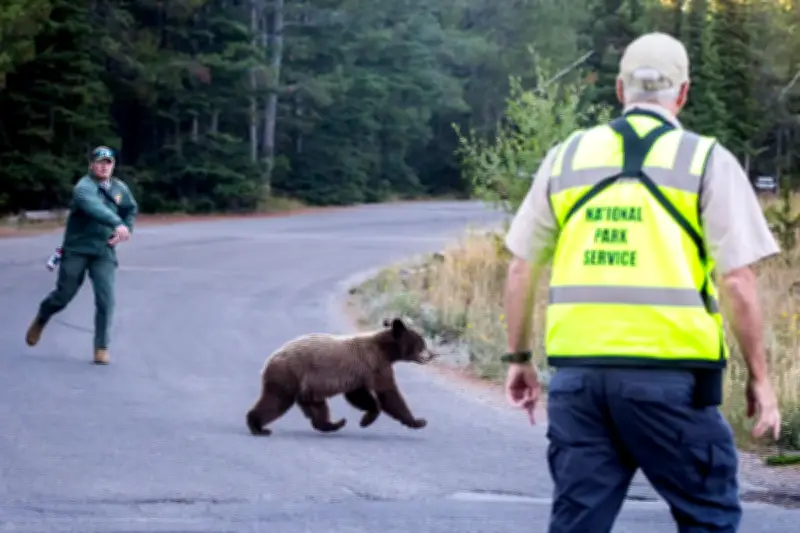
Wildlife workers across the United States are facing a surge in encounters between bears and humans, with at least 15 states reporting an increase this year, according to the Washington Post. The trend is forcing difficult decisions, including euthanizing animals that have become conditioned to human food.
Rising conflicts and tough decisions
Dan Thompson, supervisor of the large carnivore section of the Wyoming game and fish department, expects the number of bears he and other state workers have to kill this year to be among the highest on record. "None of us got into this job to kill the animals we love," Thompson said.
Experts largely attribute the increase to the impact of unusual weather on bear food sources and a rebound in bear populations over recent decades. In Wyoming, like other states, bears are increasingly entering places where humans live, forcing wildlife workers to act.
Weather and habitat pressures
This year, the western US experienced a warmer winter and severe drought conditions, which limited vegetation like berries and acorns that bears eat to regain fat after hibernation. That prompted some bears to seek food in developed areas.
"Their whole lives revolve around recovering from hibernation and preparing for hibernation, and they have really high caloric needs and so when they can't find their natural food sources, they have to go look for alternatives," said Nate Bowersock, a biologist with the Missouri department of conservation.
State-by-state impact
Connecticut has had a steady increase in bears entering homes over the last decade. From 2014 until 2020, there were less than 25 reports each year, according to the state. In 2022, 2024 and 2026, the state had at least 60 annual reports.
In Florida, the fish and wildlife conservation commission received an average of 2,500 complaints concerning bears annually from 2006 to 2010; from 2021 to 2025, the state average was more than 6,400. Black bears were once designated an "imperiled species" in the state; in 2025, the population had grown enough to allow black bear hunting for the first time in a decade.
In Colorado, there have been more than 8,600 reports of bear sightings and incidents this year, more than twice as many as last year, according to the state parks and wildlife department. The agency has euthanized 294 bears, three times the 2025 amount. There have been 10 confirmed bear attacks in Colorado, the highest number on record. This month, a black bear bit a woman on her forearm through her tent, and another entered a condo through a bedroom window and scratched a woman.
In August in New Mexico, one killed a 67-year-old wildland firefighter inside his home.
Prevention and outlook
Bear attacks remain rare, and humans can minimize risks by not leaving pet or human food outside, securing garbage in bear-resistant containers, and not feeding bears. When exploring outdoors, people should carry bear spray and store food and toiletries in bear-resistant containers. If a bear approaches, people should hold their ground, wave their arms and yell "hey bear" until it leaves, according to BearWise.
Such measures help keep bears alive too. "Once bears have obtained food rewards that they associate" with people, "we call that human-food conditioning. Once they are at that level, we are going to have to put that bear down," Thompson said.
Despite the increase this year and projections that the climate crisis will produce more severe droughts, Thompson thinks this year is an anomaly. "I have seen over the years and decades that things ebb and flow," he said. "The high level of animals that were removed in conflict, that takes those out of the equation, right? And so for all those reasons, I would not expect this to be the norm."