
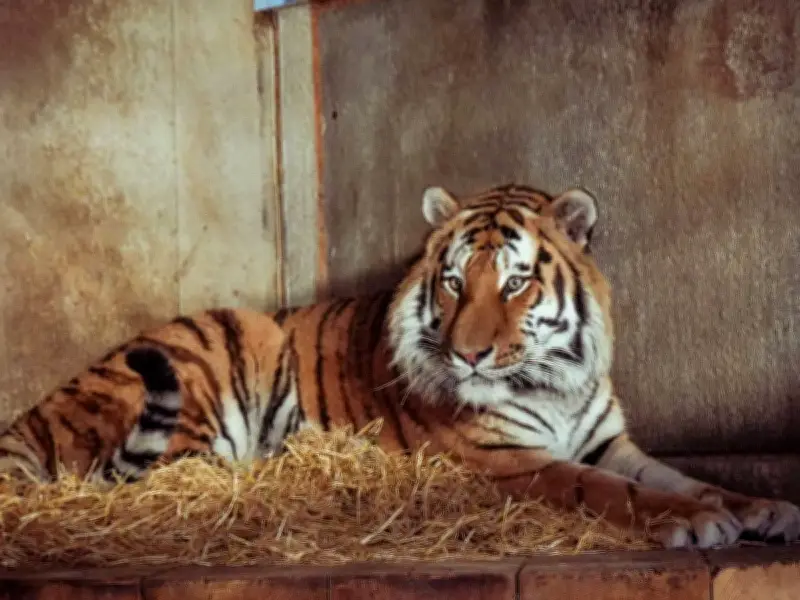
A man was fatally mauled by an Amur tiger at Yorkshire Wildlife Park on Saturday (October 10), marking the third tiger killing in a UK zoo in just over a decade. No other animal has been involved in a UK zoo death in the last two decades, while globally tigers top the charts for fatalities from animals in captivity.
Grisly history of UK tiger attacks
The recent death in Yorkshire is by no means the only such attack at a UK zoo in recent years, with two more people killed in the last 13 years. In May 2013, animal lover Sarah McClay, 24, was savagely mauled by a Sumatran tiger called Padang at South Lakes Wild Animal Park in Cumbria. The experienced keeper was carrying out her normal duties when the beast gained access to a staff corridor and attacked her. She suffered catastrophic injuries and was airlifted to hospital, but tragically died.
An inquest later heard that a defective bolt on a tiger enclosure door had allowed the animal to reach the corridor where she was working. Four years later, tragedy struck again when Rosa King, 33, was killed by a Malayan tiger called Cicip at Hamerton Zoo Park in Cambridgeshire. The popular keeper was attacked in May 2017 after entering an enclosure without realising a metal slide designed to separate her from the animal had been left open. Her body was discovered by a visitor, while investigators found a bloodstained paw print, an overturned bucket and cleaning equipment near the scene. An inquest ruled her death an accident.
Britain's bloody history with captive tigers stretches back even further. Three keepers were killed at Howletts Wild Animal Park in Kent between 1980 and 1994, including two men attacked by the same man-eating female tiger within a few weeks of each other.
World's deadliest zoo predators
The danger posed by captive tigers extends far beyond Britain. A major international study published in 2026 examined 1,047 documented accidents involving animals and humans at zoos, wildlife parks and aquariums across the world, dating back to 1815. Researchers found that tigers were involved in more recorded incidents than any other animal, accounting for a staggering 169 attacks and accidents. That put them ahead of elephants, with 142 incidents, killer whales with 123, lions with 86 and bears with 60.
The findings suggest tigers are among the most formidable dangers faced by people working with captive wildlife, although the figures do not establish which species poses the greatest risk per encounter. And it is not just in captivity that tigers have earned a fearsome reputation. A scientific review published in 2014 described tigers as the most frequent killers of humans among the world's large cat species.
Researchers cited historical estimates suggesting the animals killed more than 34,000 people across the Indian subcontinent during the 19th and early 20th centuries. Perhaps the most notorious was the so-called Champawat Tigress, a Bengal tiger blamed for an astonishing 436 deaths in Nepal and India. The animal terrorised communities for years before being shot dead by legendary hunter Jim Corbett in 1907. According to Guinness World Records, she remains the deadliest individual tiger on record.
Why do tigers kill humans?
Experts say tigers can be deadly because even those born and raised in captivity never completely lose their natural killer instincts. A scientific study published in Wilderness & Environmental Medicine found that big cats remain wild predators, with powerful hunting and territorial instincts, and it doesn't matter how long they have lived alongside humans. This means that even seemingly docile tigers that are familiar with their keepers can suddenly attack if they feel threatened or someone enters their territory.
The animals use their enormous strength, sharp claws and powerful jaws to overpower victims, often targeting the neck and throat. Another study, which examined two fatal tiger attacks at zoos in Germany, found that the animals appeared to be defending their territory. In both cases, experienced keepers had entered areas where the tigers still had access, and both suffered fatal neck injuries. Researchers concluded that the tigers likely saw the keepers as intruders and attacked to defend their space.
It means tigers do not necessarily attack people because they are hungry or hunting for food. Simply entering their territory can be enough to provoke a deadly reaction.




