
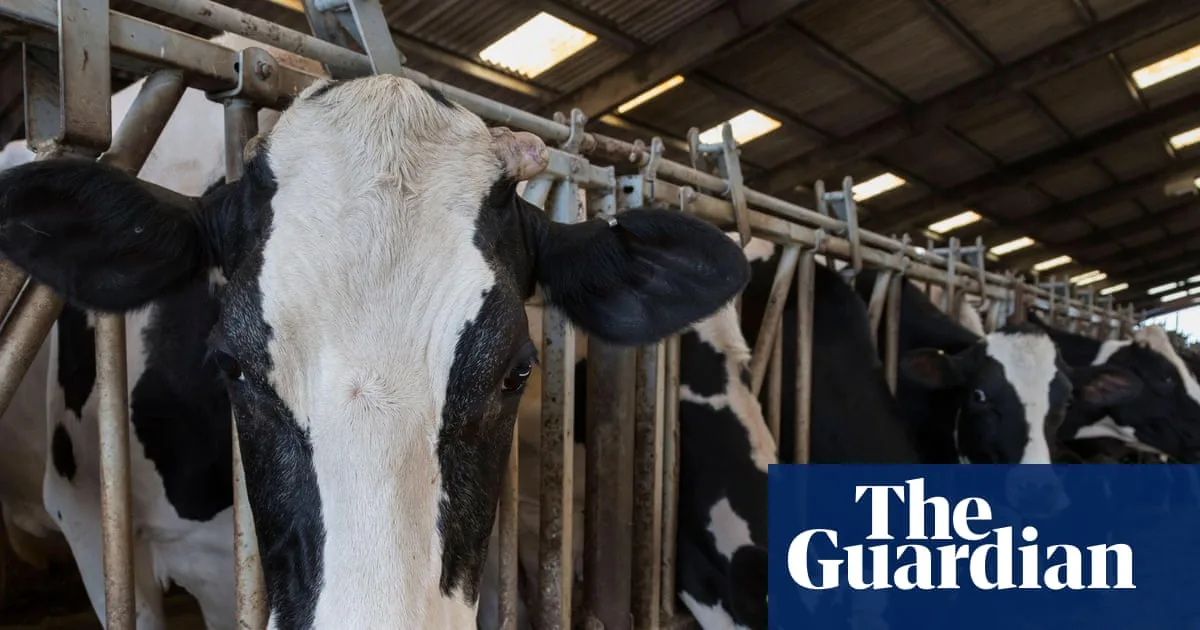
The number of intensive dairy farms in the UK where cows are permanently housed indoors has more than doubled since 2015, according to a new investigation. Data from the Bureau of Investigative Journalism (BIJ) reveals at least 180 such farms now exist, up from around 70 a decade ago, as farmers face soaring costs and sell milk at a loss.
During the same period, the number of 'mega dairies' housing over 700 cows has also doubled, with 40 such farms now operating, the largest containing 2,600 cows. Unlike intensive poultry and pig farms, large dairy units in the UK are not required to hold environmental permits, meaning the government lacks data on their numbers and locations.
Farmers have been forced to 'go big' and adopt more intensive systems to boost productivity amid shortages of fertiliser, fuel and feed. Some have sold milk for as little as 28p per litre, despite production costs of around 40p per litre. Major dairy processors such as Arla, Müller and Saputo, which supply UK supermarkets, have recorded substantial profits.
Liberal Democrat MP Danny Chambers criticised the imbalance of power in the supply chain, stating that 'a handful of powerful retailers' and processors exploit farmers. The BIJ identified 42 factory units across the UK, with hotspots in Devon, Cornwall, Dorset and Cheshire. Of these, 16 confine at least 1,000 cows, while the average UK dairy herd is just 160 cows.
Farmers remain divided on the trend. Some argue that year-round housing allows better productivity and health monitoring, denying any compromise to welfare or environmental standards. Others, including organic farmers, express concern over the lack of grazing and the economic impact on smaller farms. Campaigners also warn of pollution risks linked to dairy and beef cattle farms.
The shift mirrors a wider pattern in UK livestock farming, with previous investigations revealing the spread of poultry and pig megafarms, as well as US-style beef feedlots. Chambers is among MPs calling for legislation to ensure fairer treatment and prices for farmers within supply chains.




