
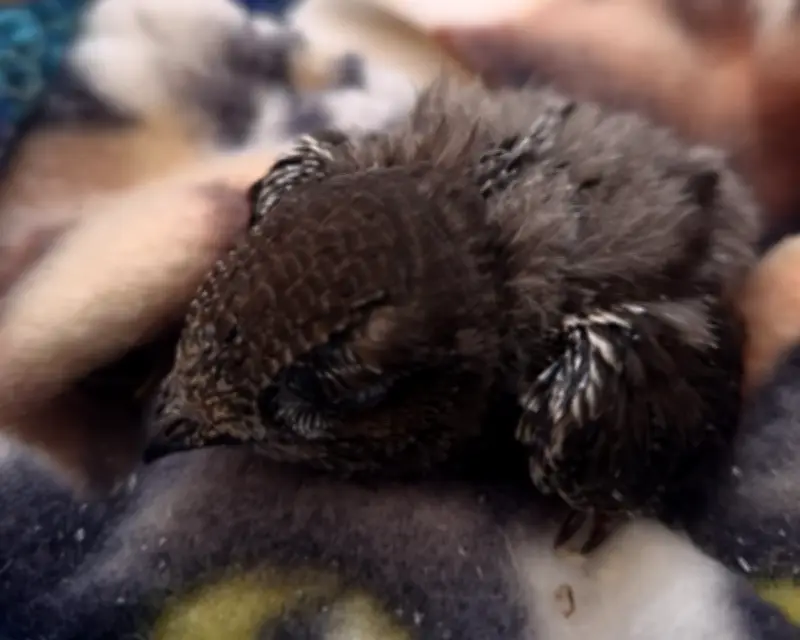
Conservationists fear that swift chicks were thrown into a skip during house renovations in Jarrow, South Tyneside, despite laws protecting wild birds' nests. The Northern Swifts Group (NSG) was alerted to the destruction of at least one nest on Tuesday in a street where houses were being renovated by a contractor appointed by South Tyneside Council.
Swiftlet Rescued After Nest Destruction
A single swiftlet found in a badly damaged nest was taken in by Laura Crompton of Pawz for Thought, a local wildlife rescue centre. Though dehydrated and in poor condition when found, it is said to be stabilising. Nest debris was also seen in a skip used by the contractors, which was removed before NSG representatives could make further checks. The damaged nest was found where many birds had been reported.
Legal Protections Under the Wildlife and Countryside Act
Under the Wildlife and Countryside Act 1981, it is illegal to disturb wild birds' nests while they are in use or being built. Sue Hope of the NSG told the Guardian it was unlikely only one nest had been destroyed, as swifts tend to nest in colonies. Nests often contain two or three swiftlets. On her visit to the site on Wednesday afternoon, she saw at least 10 swifts circling above.
“It is a horrible thing to happen,” Hope said. “Swifts are amazing birds, you can’t fail to be lifted by their utter joy. And they are in steep decline. Not enough is being done by the government to help them.” She said the incident highlighted the need for councils to inform contractors about how to correctly deal with birds' nests when found in properties undergoing work.
Swift Population Decline and Habitat Loss
Swift numbers have plummeted in the UK by about 70% since 1995, as their habitats have disappeared. They tend to nest in buildings, but few modern ones have the eaves and small cavities they prefer. A recent study showed the migratory birds return every year to the same nests. Building work and renovations are often fatal for the birds when holes are filled in and nests are, wittingly or unwittingly, blocked up. There was outrage in April when nest holes were filled in during the refurbishment of a Derbyshire rail viaduct, which Network Rail subsequently reopened along with new nesting boxes. In May, the government refused to redraw rules on new homes in England to require the installation of “swift bricks”, which allow for nests without harming the building fabric and cost about £35. They are mandatory in Scotland.
Council Investigation and Contractor Response
A spokesperson for South Tyneside Council said: “We are aware of concerns that swift nests may have been disturbed during roofing works undertaken by a council-appointed contractor in Lulworth Avenue, Jarrow. As soon as this was brought to our attention, further works were suspended pending the completion of additional ecological surveys and assessments.” The council has requested a full report from the contractor. The spokesperson added: “South Tyneside Council takes the protection of wildlife very seriously and has launched an immediate investigation. Ahead of any roofing works starting, a full ecological survey is carried out and contractors are given ‘toolbox talks’ around appropriate action should a nest be found. We will continue to work closely with the contractor and relevant ecological specialists to ensure appropriate measures are in place to protect wildlife and comply with all relevant legal and environmental obligations. As our investigation is ongoing, it would be inappropriate to comment further at this stage.”
The roofing contractor, John Flowers Ltd, was contacted for comment but told the Guardian it would not answer questions about the issue. In a separate incident last year, after the intervention of a local swifts group in Consett and with the involvement of Durham police, the company agreed to halt work on housing to prevent potential damage to birds’ nesting sites.




