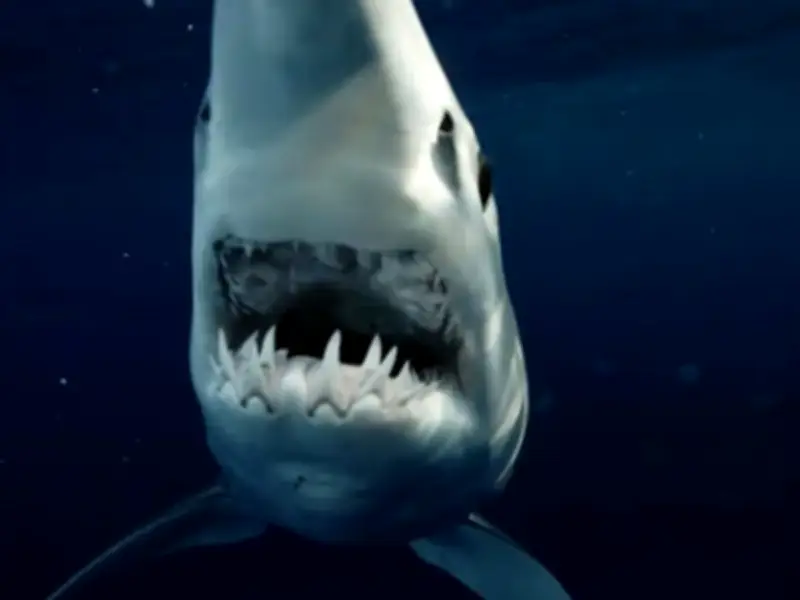
Marine biologist Craig O'Connell has ruled out the theory that a shark terrorising New York's coast was a radioactive mutant after obtaining its DNA. Instead, the creature, dubbed Sharkzilla, is a large, highly protective mother mako shark that is both feeding her pups and pregnant.
The shark left a 24-inch bite on a humpback whale and a 22-inch wound on a grey seal, and had been tracked as part of Discovery's Shark Week special Sharkzilla Takes New York. O'Connell had previously warned that decades-old leaking nuclear waste dumped in the Hudson Canyon could have created a genetically enhanced killer, saying, "Faster, stronger and deadlier than any predator on Earth. We are calling it Sharkzilla."
DNA rules out radioactive mutation
Using baited cameras, O'Connell and his team lured the creature close enough to collect DNA, which disproved the mutation theory. Rather than a mutant, the shark was revealed to be an expectant mako in need of extra food.
Hunt for Big Rose
The revelation comes weeks after a separate giant shark outsmarted scientists attempting to track her. A team of marine biologists tracking a 20ft underwater monster near the coast of the US and Canada have named her Big Rose because of a rose-shaped mark on her fin.
Dr Neil Hammerschlag is reportedly leading efforts to track Big Rose down, with his hunt to be shown in American TV's Shark Week coverage. The search brought him face to face with the beast while looking for great whites off Nova Scotia, near Mud Island in the North Atlantic.
Using massive bluefin tuna as bait, researchers attracted and tagged several sharks measuring well over 10ft, but Big Rose remained elusive. After hours of searching, she finally emerged, swimming near the boat and displaying her signature fin marking.
According to the Daily Mail, Hammerschlag and his team could not get the 50-year-old shark close enough to attach a tracking device. Even with more tuna carcasses used as bait, the great white swam away without a trace.
Potential record size
Marine biologists present managed to take measurements, estimating Big Rose weighs around 3 tonnes, with a length of about 20ft and a width of 6ft. No shark has ever been officially measured at longer than 20ft, meaning Big Rose could be the largest ever seen by humans.