
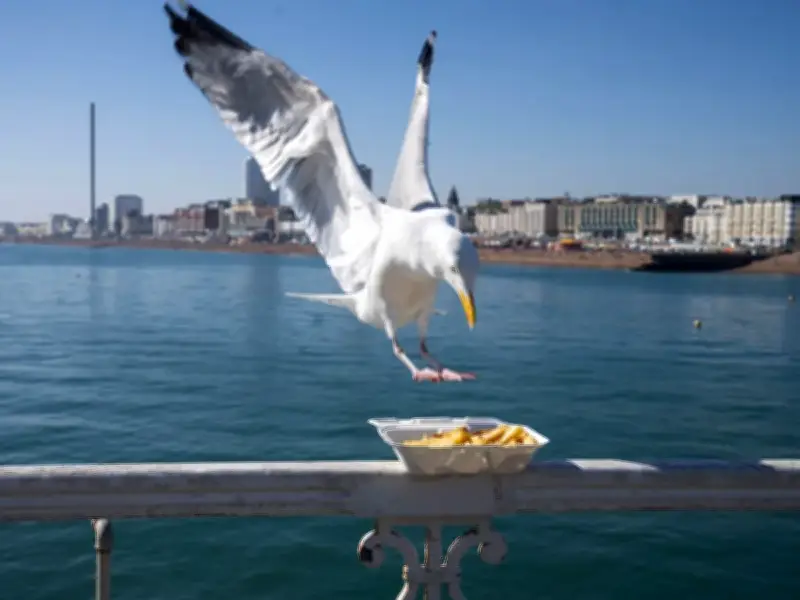
The boss of a wildlife sanctuary says seagulls are a tourist attraction and should be saved, after her team rescued 300 of the birds. Alexandra Smith, who runs Whitby Wildlife Sanctuary, says 'wasteful' humans are to blame for turning them into scavengers by leaving 'litter and food' lying around.
Busy summer for sanctuary
The North Yorkshire charity has taken in at least one 'sick, injured or orphaned gull chick' daily throughout the summer, in what has been one of its busiest years. At the moment, 10 seabird species are red-listed by the RSPB, meaning they are of 'greatest conservation concern'. These include common, herring and black-backed gulls as well as kittiwakes.
Alexandra said despite seagulls' bad PR, they would be much missed if they vanished from seaside spots. She said: 'I think actually the vast majority of people who live by the sea, who visit the sea, expect seagulls. It wouldn't be the same going to a coastal town and not hearing the sound of a gull.'
Bird flu impact and rescue efforts
The centre manager said gull numbers had been 'badly affected' by bird flu in recent years. Most of those rescued by volunteers are 'really adorable little fluffy chicks' that fell from nests, often in residential areas. They are hand-fed until strong enough to join adult birds in the sanctuary's main enclosure.
'Then if they're flying, they're eating independently, they want nothing to do with you,' Alexandra said. The birds are released into the wild at resorts along a 60-mile stretch of coast between Redcar and Bridlington.
Why gulls live alongside humans
Alexandra said it is no surprise the birds congregate in towns where 'a pretty cosy life' is on offer. 'We've always got a lot of landfills, litter and waste food about and gulls know it,' she said. 'That's why they tend to choose to live side-by-side with us.'
It follows claims that seagulls have been getting 'drunk' after munching on flying ants. The birds have been feasting on the insects, which have become active in the excessive summer heat. They are said to have been spotted wobbling about Suffolk coastal towns Lowestoft and Aldeburgh.
Dr Viola Ross-Smith, from the British Trust for Ornithology, suggests the gulls are intoxicated by an acid released by the ants. The ants discharge formic acid as a form of defence when they come under threat, and consuming sufficient ants will cause the birds to become unsteady on their feet due to the overload.




