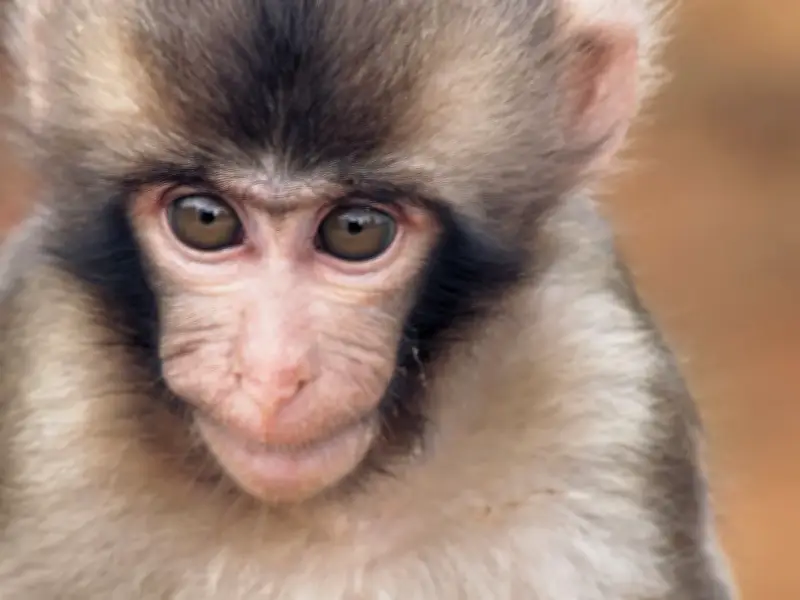
A university science lecturer has been accused of tormenting baby monkeys and slicing their eyes before experimenting on them.
University of Washington experimenter Mark Walton has allegedly spent nearly three decades and millions of taxpayer dollars tormenting monkeys for scientific experiments, according to animal rights organisation PETA.
This allegedly includes slicing the tendons in baby monkeys' eyes, or forcing them to wear goggles for the first three months of their lives, claims the organisation.
Allegations of abuse
Walton works in labs where students come and study, and receives the apes from the Washington National Primate Research Centre (WNPRC), an organisation that allegedly steals monkeys away from their mothers at a very young age.
“Some babies then have the tendons in their eyes sliced,” wrote a PETA spokesperson. “Others are forced to wear vision-distorting goggles for the first three months of their lives.”
They added: “Once the monkeys are older, Walton's laboratory slices open their skulls, installs invasive recording chambers, and inserts metal coils inside their eyes.
“They strap the monkeys into chairs and use the metal post that is screwed to their skull to keep them from moving.
“He places the restrained monkeys in a room without any light and shines a laser dot on a screen and 'rewards' the monkeys with drops of applesauce if they look at it.”
Walton's response
In response, Walton claimed he “has to carry out these experiments” in order to maintain funding for his lab.
He said: “I have to publish papers to stay funded, and there is the risk of my lab space getting [taken] away if I never run experiments.”
Monkeys in Walton's laboratory reportedly show signs of anxiety and stress, while some even self-mutilate to a horrifying extent, according to documents obtained by PETA.
Impact on monkeys
According to the organisation, two monkeys – Sonic and Goose – bit themselves so severely that Walton had to intervene, because it would “threaten their usability” in his experiments.
In his lab meeting notes, Walton suggested conditions at the WNPRC might be contributing to the problem: “[Self-biting] implies that there is something going wrong here at the primate center that is making this more likely to happen.”
Daily Star approached Mark Walton and the University of Washington for comment.