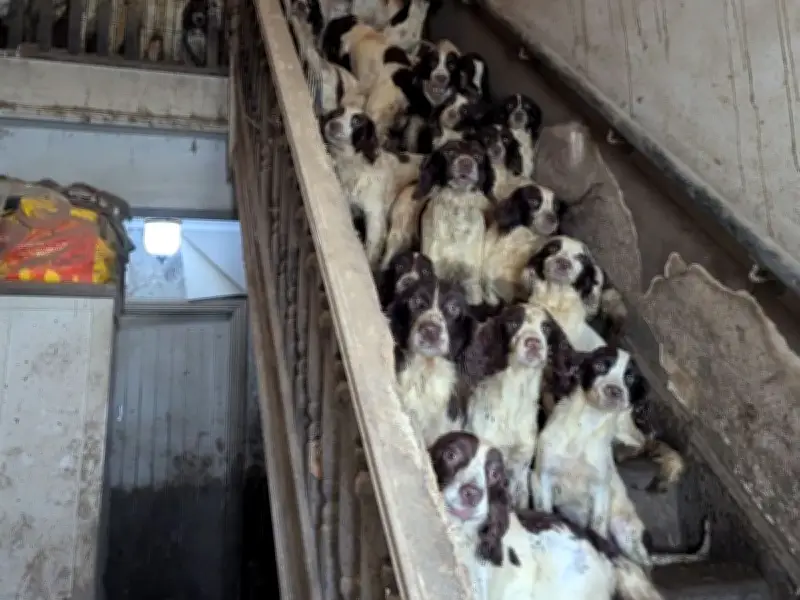
The RSPCA is urgently appealing for 'extra-special adopters' after rescue teams discovered 84 dogs and two cats neglected and living in "appalling" conditions at a property in South Yorkshire.
Nine RSPCA officers, accompanied by police and the local authority, removed the animals—mainly springer spaniel-type dogs—from the property in Tickhill, near Doncaster, on 18 April last year. Last week, a 61-year-old man was found guilty of three animal welfare offences following a two-day trial at Barnsley Magistrates' Court.
Rescue and rehoming efforts
All but one dog rescued from the property has been rehomed. The incident reflects a number of other cases whereby rescue teams struggle with rising cases of animals being mistreated and abused.
So far this year, RSPCA frontline officers are dealing with an average of 410 'multi-animal' incidents—involving 10 or more animals—every single month, an increase on 2025, which was a record-breaking year.
Record numbers of multi-animal cases
In 2025, RSPCA frontline officers responded to more than 4,200 incidents involving 10 or more animals at a single address—nearly 12 every single day and 355 a month. These incidents involved 88,000 animals, including dogs, cats, small pets, horses, and exotic animals, and 75 of those cases involved more than 100 animals—more than one every single week.
Many of the animals rescued from these situations have behavioural and medical needs requiring rehabilitation. As a result, the RSPCA is urgently calling upon experienced and patient pet owners to consider helping by rehoming and fostering.
'We need help'
Jo Rowland, Chief Executive for the RSPCA, said: "We are struggling and we urgently need help. Our frontline officers are finding dozens, even hundreds of animals in need at single addresses."
"We are getting amazing support from other animal charities and our brilliant network of RSPCA branches but we are all under immense strain," she added. "Animals who have come from homes like this often have behavioural and medical needs, due to the environment they had been living in and need a little more care and understanding."
"We need to get pets out of our centres and into loving homes so we can continue to rescue."
The charity said rising levels of multi-animal cases are putting unprecedented pressure on its teams and volunteers across England and Wales.
Cases of large numbers of animals being kept at one address can be linked to mental health struggles, the cost of living crisis, or breeders operating with poor practices. RSPCA experts say that initially well-meaning individuals often see situations spiral out of control.
"Hoarding incidents are just one of the ways in which these situations occur," Jo added. "Some multi-animal incidents involve breeders or people can become overwhelmed unintentionally by not neutering early enough."
"In many cases the best route is to offer advice and support such as neutering and rehoming some of the animals, so they are at more manageable levels."
The RSPCA is encouraging people to contact an animal charity if they, or someone they know, is struggling with the numbers of animals in their household. "The sooner actions are taken the better for animals and people," the charity said.