
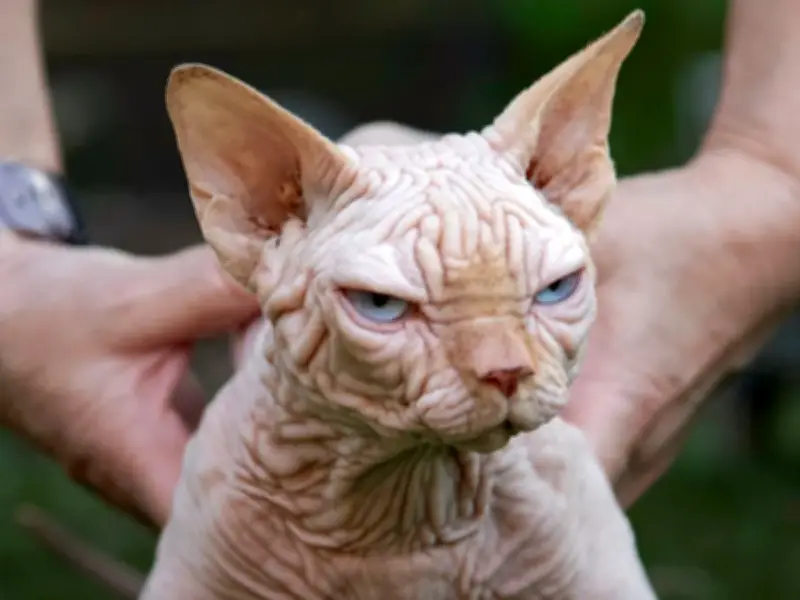
The breeding of cats like the 'XL Bully' is exploding across the UK, creating a generation of pets doomed to a lifetime of agony, animal welfare experts have warned. Demand for bizarre "designer" breeds, including flat-faced cats, hairless mutants and short-legged "XL Bully" felines, is surging.
Charities warn that buying felines bred for "cute" extreme looks is causing "unnecessary suffering" and devastating health problems. Animal experts are sounding the alarm, warning that felines could soon bear little resemblance to the traditional British moggy unless urgent action is taken.
Social media trends and celebrity influence
Social media trends and celebrity owners, such as Taylor Swift, who owns Scottish Folds, have triggered a surge in demand for cats with folded ears, squashed faces, stunted legs and missing hair.
Scottish Folds now make up around two per cent of the entire UK cat population. However, the gene responsible for their folded ears damages cartilage throughout their bodies, causing severe bone deformities, constant pain and crippling lameness.
Alarming boom in hyper-mutated breeds
Recent years have seen an alarming boom in hyper-mutated breeds. Between 2016 and 2025, the RSPCA recorded a massive 200 per cent spike in British Shorthairs and a 180 per cent surge in Persians. Both are brachycephalic, meaning they are deliberately bred with deformed, flattened skulls.
Meanwhile, the controversial "XL Bully" cat has exploded in popularity since first landing in the UK in 2024. Created by cross-breeding hairless Sphynx cats with short-legged Munchkins, the controversial mix leaves animals unable to function properly.
Health defects and calls for action
Flat-faced Persians suffer from squashed skulls that cause severe breathing difficulties, eye ulcers, painful conjunctivitis and misaligned teeth. Hairless Sphynx cats are left defenceless against UV rays, highly prone to skin infections and unable to regulate their body temperature in deadly heatwaves. Scottish Folds suffer from deliberate genetic mutations that trigger untreatable, agonising joint conditions.
Unwitting owners often face astronomical vet bills before abandoning the animals at overcrowded rescue centres. Commercial cat breeding remains largely unregulated in the UK, save for minor licensing rules in Scotland.
Alice Potter, senior scientific and policy officer at the RSPCA, said: "Cats must not be forced to suffer unnecessarily because of physical traits that some humans find desirable." Madison Rogers, associate director of advocacy at Cats Protection, added: "If action is not taken quickly, we are likely to see more alarming examples of what we are calling 'Frankenstein' cats – who bear no resemblance to our beloved moggy and, tragically, come with multiple health issues." The RSPCA and Cats Protection are now demanding urgent government intervention to ban breeding cats with harmful genetic traits.




