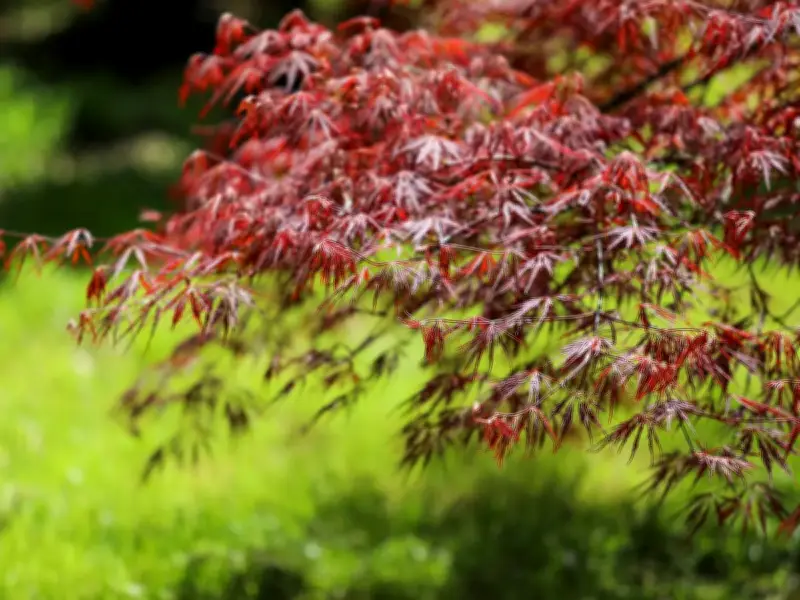
Gardeners are being urged to mulch their Japanese maples now to keep leaves on the trees for longer, according to guidance from the Royal Horticultural Society (RHS). Without this key task, the delicate trees can shed their leaves early, meaning their spectacular autumn shades may never show.
Why mulching matters for acers
Japanese maples have shallow root systems that can struggle to retain moisture effectively. The RHS advises maintaining consistent moisture levels at this time of year, recommending planting the tree "in moisture-retentive but well-drained soil" and avoiding "planting in wet soils or on sites that are prone to drying out."
In direct sunlight, the soil around Japanese maples dries out quickly, leaving foliage vulnerable to sun damage. Without proper attention, leaves can begin to droop, turn brown and fall, leaving the tree completely bare during the summer months.

How to apply mulch correctly
Mulching — spreading organic matter across the surface of a plant's soil — not only provides nutrients but also acts as a water reservoir during warmer spells. The RHS advises keeping newly acquired specimens and container-grown plants thoroughly watered, and applying mulch around the base of trees planted in the ground using organic matter, such as garden compost.
The RHS said: "Make sure the mulch is kept away from the trunk of the plant. Mulch the surface of the compost in containers with gravel or slate, again to retain moisture."
Timing and feeding warnings
The RHS also cautioned gardeners that the window for mulching plants is closing, with all feeding needing to cease after November. It said: "Don't feed too early or too late in the season (don't feed between November and March). Avoid over application of high nitrogen fertilisers."
This preserved moisture from the mulch during late summer and early autumn gradually seeps into the soil, ensuring Japanese maples remain adequately hydrated and healthy, allowing them to showcase their stunning crimson foliage throughout the summer months. Spreading a layer of mulch around Japanese maples can shield the foliage from burning and suppress weeds, while encouraging fresh growth as the tree prepares to drop its leaves.
Cold weather and mulch types
It also offered guidance for any approaching cold weather. It said: "If frost is forecast when the leaves are newly emerged, move container plants to a sheltered spot or frost-free area and cover plants in the ground with a double layer of fleece. In very windy weather, a temporary windbreak is a worthwhile - formed by stretching a screen of wind-reduction netting between canes."
Mulches that retain substantial moisture while staying light in weight are typically the best option for Japanese maples, including pine bark, wood chips, garden compost or leaf mould. With proper watering and care, Japanese maples should maintain their stunning red foliage well into September, allowing gardeners to enjoy a thriving garden that's primed for another spectacular display of colour next year.