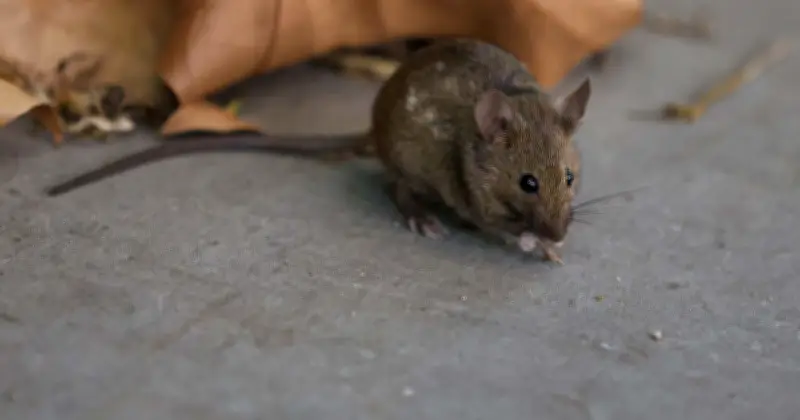
UK homeowners are being warned of a winter rat invasion into homes and sheds, driven by cold and wet weather, after a hot summer caused the rodent population to explode, according to experts. A pest controller with three decades of experience said: "I've been working in this industry for 30 years and because of a cocktail of problems combining at the same time, I have never had more calls about rats - and it's getting worse."
Surge in callouts and population
Nearly half of all pest-related callouts now involve rodent infestations in homes and workplaces, with some rodents reported to be comparable to "the size of a small cat or dog". Last year, Rentokil warned of a 30 per cent surge in rat populations, equivalent to 33.75 million extra rats.
Pest control experts report that some householders are attempting to tackle the problem themselves using poison, but this poses risks to wildlife and domestic animals. It also offers no lasting remedy if rats are entering via sewers; they will merely return.
Deterrent methods and costs
Several deterrent methods are available, and one involves a 22p vegetable. Strong-smelling spices like cayenne pepper or garlic cloves can be distributed near your property's access points. These powerful odours can aggravate a rodent's exceptionally sensitive nose. This approach proves economical too - a 4 pack of garlic from Tesco costs just 87p, working out at 22p per bulb.
According to pest control specialists speaking on Radio 4's You and Yours programme, callouts have increased dramatically this year. One expert revealed that callouts have risen by 80 per cent over the past five years. A scientist also noted that people are mistakenly deploying 'humane' traps which ultimately kill the rodent regardless.
Expert insights on the problem
Presenter Winifred Robinson commented: "Climate change may be hard for humans and some plants but it seems it's good for rats. We've had a lot of messages from listeners trying to get rid of rats. People who report seeing rats running around in public parks, on the streets or in the bin areas beside their blocks of flats. When we asked the National Pests Technicians Association about it, it told us call-outs for rats are indeed rising - it represents 1,100 companies right across. Rentokill, one of the biggest of them, said calls for help with rats shot up 11 per cent in June, compared with the month before."
Nick Robertson from HF Pest Control said: "The callouts have gone up 80 per cent in the last 5-7 years." Regarding where rats are drawn to, Mr Robertson explained: "Anywhere at the moment. You've got councils which don't pick the bins up, so you've got bin areas, you've got parks where there's leftovers because the bins are overflowing. There's no general area where they're attracted, it's just human beings at the moment, the way we are, the rats have increased because of the way our society is at the moment."
On the subject of warmer summers aiding rat populations, Mr Robertson said: "Basically, we don't have cold winters any more, so they're breeding all year round. I don't know when the last time we had a really cold winter. Last year I think it dropped under zero for about a week or two weeks, if that, so it's genuinely warm all year round now and climate change has caused a big problem with the increase of rats."
Health risks and control methods
Regarding rat elimination, he noted that many of the methods previously at their disposal have been 'taken away from us': "We have to go down the non-poison route to start off with. So we'd start off with snap traps, if it's social housing we go for proofing which is to block the holes up to stop them entering the property, and just to try to improve the housekeeping of the general area.
"Poisoning is still in the methods we use, but we've got to go down the other methods first before we use poison. It's a last resort because when the rat dies, that can cause a problem with the smell, the decomposition, but the main issue is to try to improve the housekeeping of the area to stop the rats from going into the area because they're only foraging for food basically."
Steven Belmain, Professor of Ecology at the University of Greenwich, asked whether rats pose a health risk, responded: "Oh yes definitely. So we've all just been through a pandemic caused by diseases transmitted by animals, so Coronaviruses we know came from bats, but rodents also transmit many many diseases. It's a very long list. In the UK we have issues with a disease called leptospirosis or Weil's disease and that is found in this country."
He went on to warn that numerous food-borne illnesses, including Salmonella and E.coli, can be spread by rats. "So if you had a rat in your house and it was in your kitchen cupboards, you would really want to be worried about contamination of food that way. If people are going around picking up dead rats in their house, again, be careful, wear gloves, and wash your hands."
Remarkably, many of these rats reach two feet in length and are extremely corpulent, often inflating themselves further as a defensive response. A female rat usually produces around six litters annually, each comprising up to 12 offspring. Since rats become sexually mature after roughly a month, two rats can breed to produce as many as 1,250 in a single year.
How to safeguard your property from rodents
Safeguarding your property from rodents during hot spells centres on prevention. The aim is to create a physical barrier while maintaining adequate ventilation for cooling. Installing mesh screens on windows and doors offers an effective solution, though rodents can sometimes gnaw through even metal screening, so regularly inspect for breaches. Seal external openings with heavy-gauge wire mesh and secure food storage and waste bins.
Maintaining your garden properly can also reduce its attractiveness to rodents. Cut back tree branches and climbing plants such as ivy to at least 5-6ft from your rooflines and windows. Rodents seek water, food and cool shelter, so concentrate on any spots that might provide these. Heat accelerates decomposition, producing stronger odours that draw various pests, including rodents. Make sure all indoor kitchen bins and outdoor wheelie bins have securely fastened lids. If your bins are damaged, request a replacement from your local authority now, before a furry infestation disrupts your summer activities.
Rats have a remarkable sense of smell, able to detect food from over 2km away. They'll travel significant distances searching for sustenance. Consequently, if you dispose of any food in your bins, make certain they're secured with properly fitting lids. Where possible, position your bins away from your property to minimise the chance of attracting these scavengers. Keeping your bin away from your house walls can decrease the probability of drawing unwanted pests.
The expert notes that natural predators including cats or owls can successfully discourage rodents. Particular dog breeds, such as Jack Russell terriers, can also protect your property. Setting up owl boxes in your garden might encourage these hunters to take up residence, thus managing the rodent population. For those who'd rather keep animals away from their gardens, decoy predator scents purchased online offer an effective solution. These products deter rats alongside various other creatures such as moles, voles, mice, squirrels, and skunks.
Should artificial predator scents not appeal, naturally fragrant spices or oils present a practical alternative. Strong-smelling spices like cayenne pepper or garlic cloves can be distributed near your property's access points. These powerful odours can aggravate a rodent's exceptionally sensitive nose. This approach proves economical too - a 4 pack of garlic from Tesco costs just 87p, working out at 22p per bulb. Alternatively, wiping household surfaces with vinegar removes food odours that may initially draw them in. Using spices or natural oils such as peppermint or cinnamon oil throughout your property can help, though these provide only short-term solutions. For longer-lasting protection, plant rodent-deterring varieties like mint, lavender, or marigolds along your garden's edges to create a natural defensive barrier.