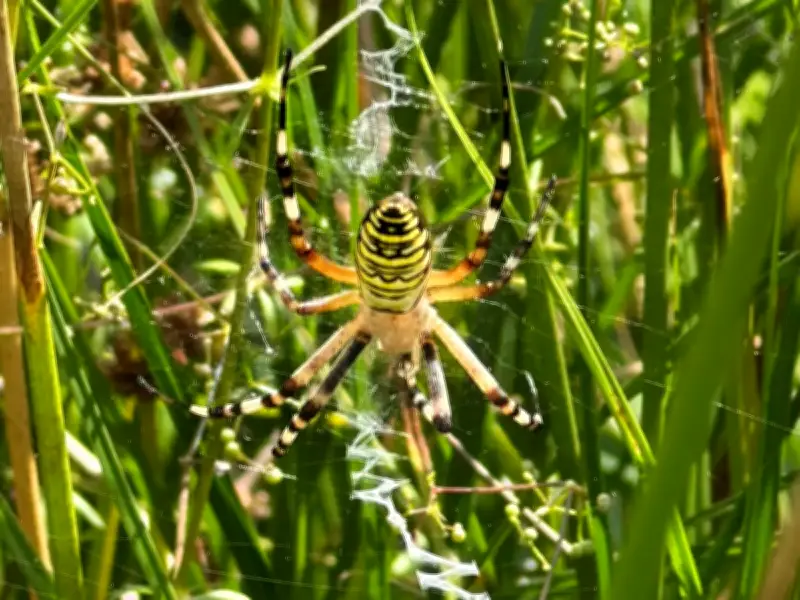
A wasp spider has been reported in Cheshire for the first time, with experts warning the discovery highlights a "worrying trend" driven by climate change. The large yellow-and-black spider, nicknamed 'Wendy' by the zoo team, was found during a biodiversity survey of Chester Zoo’s estate.
The sighting has been confirmed as the first recorded occurrence of the species in Cheshire. Previously, wasp spiders had only been spotted in the south of England, never in the North West.
Discovery during estate survey
The discovery was made by Chester Zoo conservationists working with Cheshire’s local environmental records centre, RECORD. It was subsequently confirmed by an expert from the British Arachnological Society and announced on Wednesday (September 23).

Rosie Cooper, the zoo’s estate biodiversity assistant, found the spider while surveying plant species on the 205-hectare estate. She described her reaction: “When go out into the field, it involves a lot of walking, using a mixture of apps, wildlife identifying books and our own knowledge to learn more specifics about the habitats we look after. I was looking out for plant species and then I saw this big, stripy, brightly coloured spider. I have what you might call a healthy respect for spiders, so my first thought was ‘woah!’ But now I think it’s really cool to have found her.”
Climate change impact
Wasp spiders are among a number of species whose ranges are moving northwards as they respond to a changing climate. Ruby Merriman, Chester Zoo’s Estate Biodiversity Manager, called the discovery "really exciting" but said the movement of species also serves as a reminder of climate change’s impact.
She said: “Wasp spiders are slowly moving north as their southern ranges in Europe warm too quickly for them to adapt. Some conservation organisations refer to animals driven to migrate by climate change as ‘climate refugees’ – which is a good term. They are moving because of human activity, and we need to make space for them.”
Broader biodiversity threat
Scott Wilson, head of field programmes at Chester Zoo, said such markers of climate change highlight the "major threat" it poses to biodiversity. He stated: "It's exciting to see new species like Wendy on site, but her arrival is part of a broader, more worrying trend. Our conservationists work across the world, and we are witnessing the impacts of climate change in real time, from droughts in Chile to floods in Indonesia. It is a major threat to biodiversity. When mountain snows thaw unseasonably, montane forests dry out and small islands face rising sea levels, the species that depend on them must disperse or die. There is a causal link between habitat loss and climate change, and both are already driving species to extinction. European spiders are among many species finding it harder to persist in their traditional ranges as the climate shifts. Wendy is a reminder UK biodiversity is not immune to this."