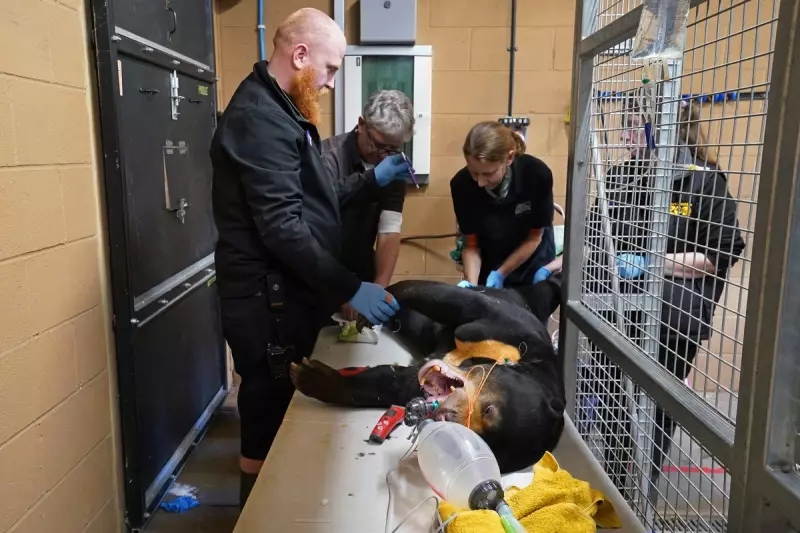
A sun bear at a Hertfordshire wildlife park has undergone a highly specialised veterinary operation, described as vital for the future of her vulnerable species. The procedure, performed by a team of doctors who travelled from Germany, aimed to address fertility issues preventing the bear from contributing to a crucial European conservation breeding programme.
A Crucial Procedure for Conservation
The bear, named Kyra, is a key resident at Hertfordshire Zoo in Broxbourne. Despite being paired with a mate in April 2023, she had consistently failed to conceive. Last month, veterinarians identified the likely cause: cysts within her womb. On Wednesday, 3 December 2025, a team of specialist vets from Germany arrived to perform the delicate surgery to remove them.
Tyler Whitnall, the zoo's managing director, emphasised the significance of the operation. "This is a complex and unusual procedure, but one that is vital for Kyra and for the international breeding programme," he stated. "If this operation is successful, it offers a real chance to boost the European population and contribute directly to the survival of this incredible species."

The Plight of the Sun Bear
Sun bears, the world's smallest bear species, are native to the dense forests of south-east Asia. They are easily identified by the distinctive golden or cream-coloured patch on their chests, which folklore says represents the rising sun. Despite their striking appearance, their survival is under severe threat.
The International Union for Conservation of Nature (IUCN) lists the sun bear as Vulnerable on its Red List. It is estimated that fewer than 10,000 individuals remain in the wild. The primary driver of their decline is the illegal bear bile farm trade prevalent in Southeast Asia, which devastates sun bears, moon bears, and brown bears across the region and into parts of Europe.
Biology and Behaviour
According to Hertfordshire Zoo's description, while sun bears are the smallest bear species, they possess a stocky, muscular build. Their sleek, black coat is thick enough to protect them from forest undergrowth but also helps prevent overheating in the humid tropical climates they inhabit.
The zoo recently shared footage highlighting the "natural behaviour" of a sun bear standing on its hind legs, a common posture used to survey their surroundings or reach for food.
Hope for the Future
The successful surgery on Kyra represents a beacon of hope for ex-situ conservation efforts. Managed breeding programmes in zoos across Europe are a critical backup for wild populations teetering on the brink. By overcoming specific health obstacles like fertility issues, conservationists can ensure a genetically diverse and sustainable captive population, which acts as an insurance policy against extinction.
All attention now turns to Kyra's recovery. The outcome of this rare procedure will determine if she can successfully mate and produce cubs, thereby playing her part in securing a future for the sun bear, an iconic yet tragically threatened species.