
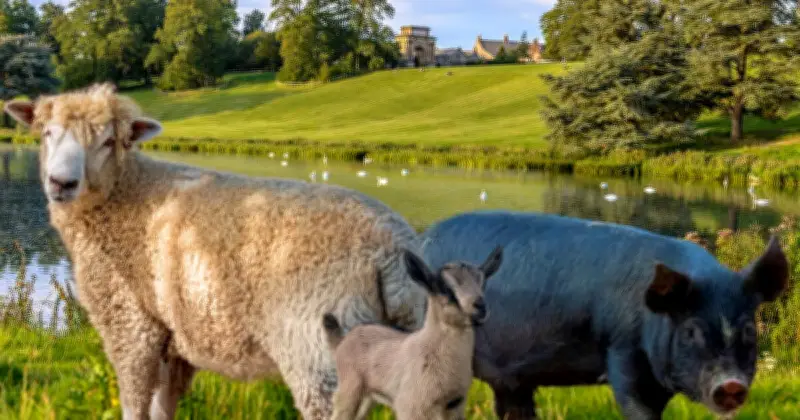
Blenheim Palace has opened Marlborough Mini Farm, a summer attraction running until September 1, where visitors can meet some of Britain's rarest farm animals, including English goats with only around 100 breeding females left in the UK. The farm, tucked beneath orchard trees beyond the Walled Garden, features shaggy sheep, Berkshire pigs, Buff Orpington chickens, and five curious English goats.
Conservation Behind the Scenes
James Hunter, Rural Estates Manager at Blenheim Palace, says the attraction opens a window onto conservation work already happening across the estate. "These animals already sit alongside the long-term stewardship and conservation grazing across the estate," he says. "We've decided to share a little bit of that with visitors because most people would never normally get the chance to see them."
The Mini Farm is the public face of work across Blenheim's 12,000-acre estate, where native breeds play a role in land management. Hunter hopes visitors gain a greater appreciation of the surrounding countryside. "I hope people make a connection between these breeds and the landscape they've just driven through," he says.
Native Breeds in Decline
Hunter explains that native pedigree breeds have declined as agriculture focused on speed and productivity. "These native rare breeds might be slower growing, they might not be quite as productive," he says. "As farming industrialised, they simply fell out of favour." Many survive only through dedicated breeders and breed societies, and Hunter warns, "If people don't have that passion, these breeds will disappear."
The Cotswold sheep, nicknamed the "Cotswold Lion" for their golden-tinged fleece, helped build the medieval wool trade that funded churches and villages. Hunter notes, "The churches, the villages, the dry-stone walls – they all connect back to these sheep." Losing such breeds would sever a link to rural history.
Berkshire Pigs and English Goats
Berkshire pigs, Britain's oldest recorded pedigree pig breed, are recognisable by their black coats and white "socks." Fewer than 300 breeding females remain nationally. Hunter says, "They're really, really friendly. They're just slow growing."
The English goats, loaned from Wilde Farm in Northumberland, nearly disappeared in the twentieth century after crossbreeding with Swiss dairy goats. Hunter admits, "I knew nothing about English goats before this." Blenheim hopes the farm's large audience—the Palace has half a million Instagram followers compared to the Berkshire Pig Society's 200—will raise awareness.
Conservation efforts extend beyond the farm, with rare livestock used in habitat management and exploration of virtual fencing for goats to tackle invasive bracken. Hunter's message: "Rare doesn't have to mean exotic. There are native British animals that struggle just as much as some of the famous endangered species people hear about. They're part of our own heritage, and they're worth protecting too."




