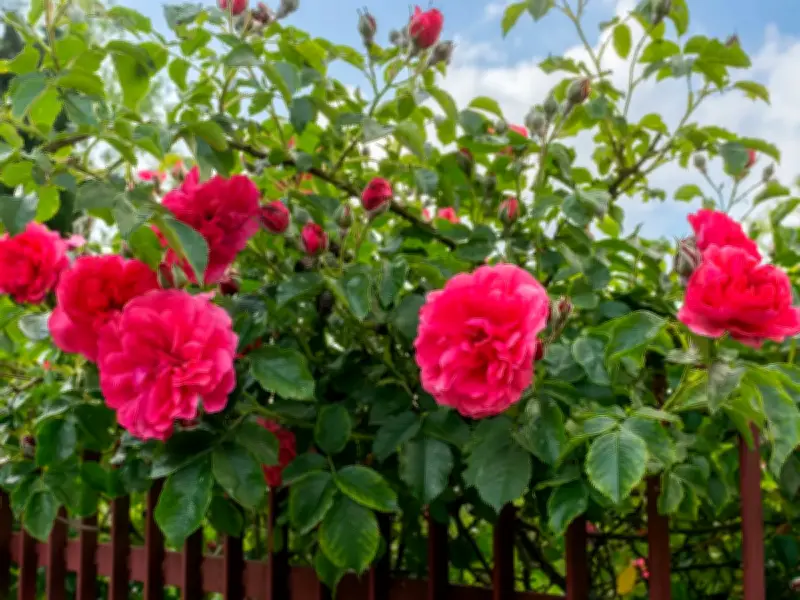
Climbing roses should be pruned in October to keep them healthy and improve next year's flowering, according to gardeners Monty Don and Alan Titchmarsh. Both experts recommend the same seasonal task as autumn frosts arrive and garden beds begin their transition from summer.
Why climbing roses need October pruning
Climbing roses are a staple of English gardens and are adaptable plants, useful for covering an unattractive wall or fence, or adorning archways. Smaller varieties can be trained around poles, which is particularly handy in compact gardens where ground space is limited.
Most climbing roses bloom repeatedly through summer, with some varieties continuing into early autumn. Pruning them correctly stimulates vigorous new shoots to replace older, worn-out stems, while also enhancing the summer floral display. An annual prune prevents climbers from overwhelming their supports and avoids the difficulty of tackling overgrown canes later.
Alan Titchmarsh's pruning method
Alan Titchmarsh says the principal task when pruning climbing roses is to "remove any dead stems". On his TikTok account @gardeningwithalantitchmarsh, he noted that pruning climbing roses will keep them "healthy and flowering".
At this time of year, he recommends cutting back old, unproductive stems to a junction — the knobbly area on a rose where the upper growth meets the rootstock — allowing new growth to be trained in its place. This removes a significant portion of the current year's growth while retaining all the stems that will bear next year's blooms.
Monty Don's step-by-step approach
Monty Don shared on his gardening blog that climbing roses can be "pruned hard now". He advises gardeners to begin by removing any damaged, crossing or particularly aged wood, which can be cut right back to the ground.
He said, "The main stems should be fanned out at an equidistance as horizontally as possible, tying them to wires or a trellis. Then all the side shoots growing from these main stems, which produced this year's flowers, can be reduced to a short stub of a couple of leaves."
"The effect should be a tracery of largely horizontal growth with pruned side shoots running along their length." As a final step, gardeners must ensure all stems are securely tied in to prevent any damage caused by harsh winter weather.