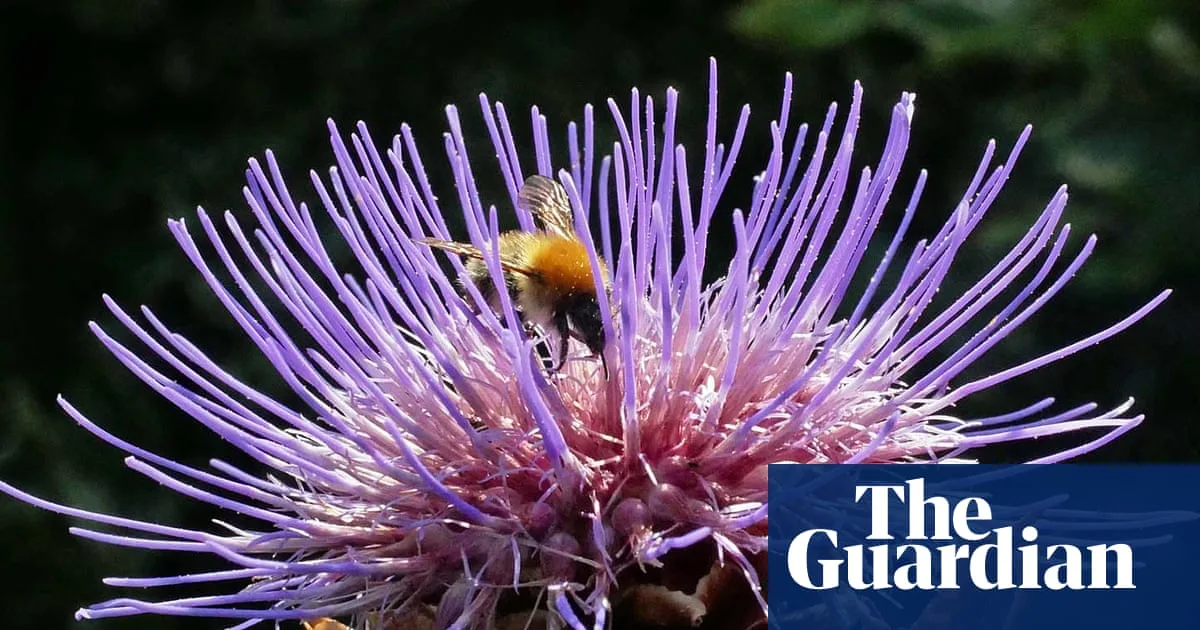
On a sultry, windless afternoon in Crook, County Durham, the air above a garden path shimmered with heat. Too hot for much activity, the garden’s owner stood watching the carnage unfolding on a 7ft-tall cardoon plant. What started in early June as small clusters of black aphids had escalated into a full-blown wildlife drama.
In June, a long column of ants from a nest under a paving stone climbed the stems, tending the aphids. They stroked them with their antennae and legs, encouraging them to produce drops of sweet honeydew. This ‘farming’ behaviour, documented by Sir John Lubbock in 1882, saw the ants move some aphids to new locations, founding new colonies. By early July, thousands of aphids covered the flower stems, causing the great armoured inflorescences to bow under the strain.
Then came flying ant day, and the ant herders’ colony rapidly declined. But the aphid population continued to explode, raining droplets of uncollected honeydew that coated leaves in sucrose. Hordes of hoverflies arrived to lap up the sticky sweetness and lay eggs among the aphids. When their predatory, slug-like larvae hatched, they wreaked havoc on the aphid colonies.
Today, the ants have gone, and the stems and leaves have a post-apocalyptic air, strewn with withered aphid corpses. Seven-spot, 14-spot and harlequin ladybirds roam the leaves, mopping up survivors. Other opportunists include neon purple and metallic blue jewel wasps, agitated ichneumon wasps, scurrying spider mites, and a host of small flies. The aphid infestation is almost over, and the wilted flower buds are reviving, opening their spectacular crowns of blue florets, beloved by bumblebees.
Over the last month, the cardoon has hosted a great pyramid of interconnected life, an unfolding drama with an ever-changing cast. One puff of insecticide six weeks ago would have ended this enthralling pulse of biodiversity. Instead, the plant became a testament to the explosive life that a single garden plant can support.