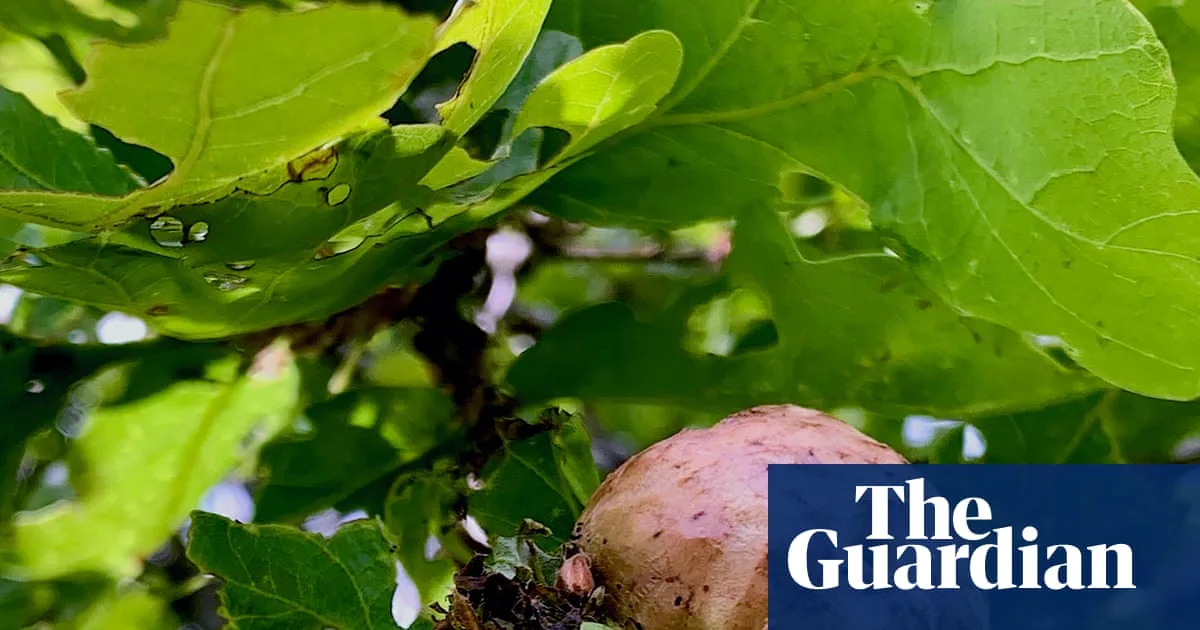
Oak Apple Day, observed on 29 May, once marked a public holiday in England, commemorating the restoration of the monarchy in 1660. The tradition stems from Charles II's escape from parliamentary forces by hiding in an oak tree at Boscobel, Shropshire. The oak apple, a parasitic gall, serves as a curious symbol of this royal tale.
These galls, formed by the oak apple gall wasp Biorhiza pallida, begin as shiny cherry-like growths in spring, maturing into brown, mottled structures resembling small apples. The wasp injects eggs and venom into leaf buds, causing the tree to produce the gall, which houses larvae in protective chambers. Once mature, winged males emerge to seek females, while females descend to lay eggs in oak roots for the next generation.
The oak apple is not merely a wasp nursery; it hosts a diverse ecosystem. Inquiline gall wasps, hyperparasitic wasps, fungi, and microbes all inhabit these structures, creating a rich microhabitat. In the 17th century, such peculiar fruits may have been viewed as magical objects, blending natural history with folklore.
Today, with Oak Apple Day no longer a public holiday, some see it as an opportunity to celebrate nature's restoration. Under ancient oaks, the interplay of natural magic and history endures, a reminder of a time when royal escape and parasitic galls intertwined in England's cultural memory.