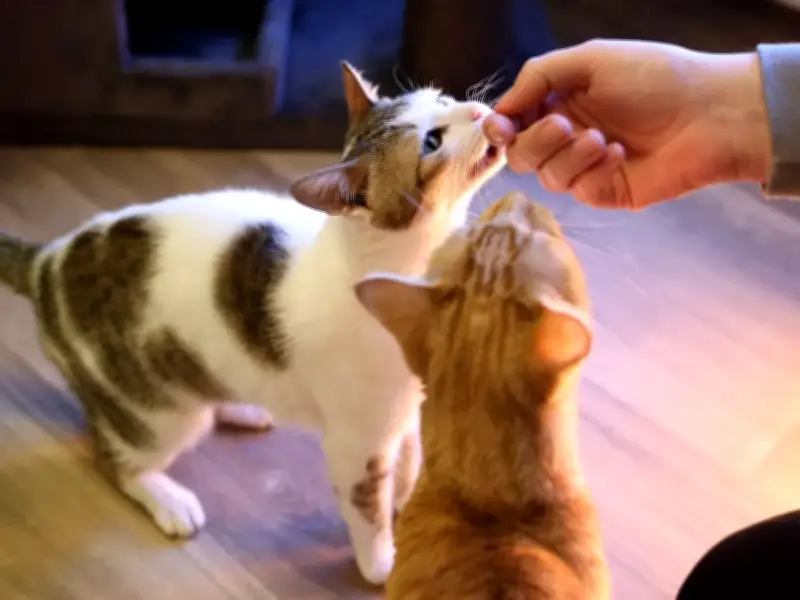
North East cat rescues are backing a campaign for a national strategy to tackle the UK's growing cat overpopulation. Cats Crisis UK, founded by Bradley Shaw, has launched a petition calling for government action, which has already gathered over 21,000 signatures.
Rescues under pressure
Bradley created the petition after his first-hand experience with Happy Paws Cat Rescue, which, like others across the UK, has been struggling with the increasing number of cats needing help and the pressures this places on rescue organisations.
Bradley said: "Working with Happy Paws made it impossible to ignore how much pressure rescues are under. We see cats coming into rescues for all sorts of reasons, but behind many of those cases are wider issues around neutering, breeding, abandonment and affordability. Rescues are doing everything they can, but we cannot expect charities and volunteers to continue carrying the responsibility for a problem that needs a national response."
Campaign demands
The campaign is calling for the Government to take a more coordinated approach to cat welfare, with particular focus on preventing unwanted litters and reducing the numbers of cats entering rescues. The campaign calls for greater access to affordable neutering, support for overwhelmed rescue centres, stronger responsible pet ownership education, and a review of measures to reduce irresponsible breeding and cat abandonment.
Local rescues backing the petition include The Bad Cat Café and Rescue in Wallsend and Helping Pets North East. Many feel that a lack of education is the biggest issue they face on basic welfare such as neutering cats.
Impact of not neutering
Female cats usually go into heat between four and twelve months, typically at six months, and continue to have multiple cycles each year if not spayed, usually between February and October. Without spaying of both males and females, more kittens are born on streets or abandoned.
For male cats, neutering reduces territorial behaviour, which minimises fights between males, a main cause of the viral infection FIV (Feline Immunodeficiency Virus). FIV causes affected animals to have a weaker immune system and, despite misconceptions, can live in multi-cat households as long as there is no risk of deep bites.
Tasmin Hirst, co-owner of the Bad Cat Café and Rescue, said: "There are so many advantages to nurturing males and females but sadly people still feel as though it's not necessary."
Vicki Withers, who started Helping Pets North East in 2012 after her time as a registered veterinary nurse, has dedicated more than 40 years of her life to animals in need. She said: "Due to cultural beliefs and/or a lack of knowledge on neutering, where help can be found and what to do, results in many cats living in heavily populated areas which are actually well fed and in relatively good condition. They then reproduce fairly easily, further adding to the population problem."
Funding and legal status
Shelters and rescues, like many other charities, are facing difficulties with funding, and volunteers dedicate hours of their own time to these animals. Vicki said: "Acquiring animals is too easy. Unplanned kittens are given to friends or neighbours because they are cute and free. Within months they are parents themselves and the cycle continues to grow."
Bradley said: "This isn't about blaming owners or rescues. It is about recognising that the current approach isn't enough. We want to hear from other rescues and vets across the country and build the evidence for a proper national strategy for cats."
The Government's current plan looks to address loopholes around regulations on the breeding of cats and dogs, but cats are often overlooked as they have the legal status of 'right to roam' unlike dogs. This means cats are not required to be kept under strict control in public spaces, making them more likely to be in danger of road accidents and putting more pressure on rescues.
With over 20,000 signatures, the petition shows public passion for the issue. Bradley said: "The response to the petition has shown that the public wants this issue taken seriously. We now want support to translate into meaningful action."