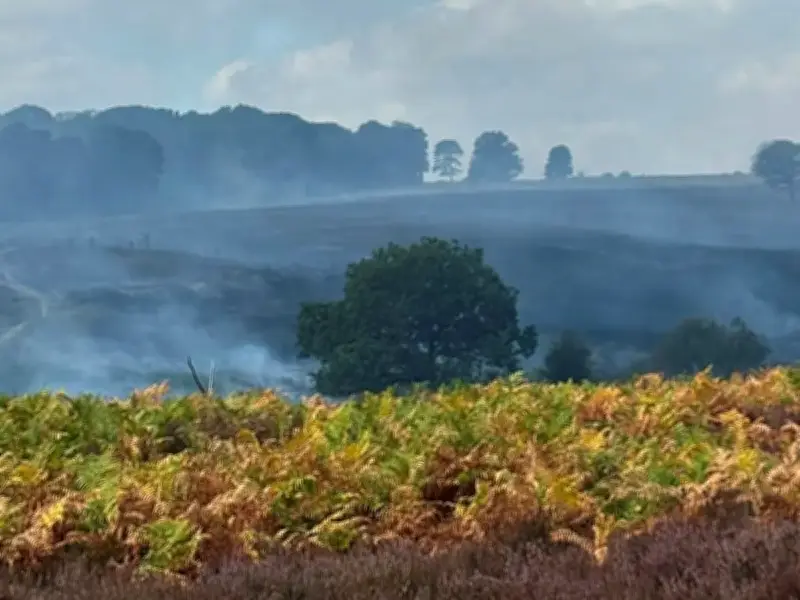
A vast tract of the New Forest damaged by a wildfire the size of 140 football pitches will take decades to recover, experts have warned.
The fire ignited after a van caught alight on the A31 near Ringwood in Hampshire on August 9. It grew to the size of 140 football pitches and took days for firefighters to quell. Hampshire Fire and Rescue deployed 26 fire engines and four water carriers following a major incident declaration. Crew members remain stationed on site to ensure the fire stays extinguished.
Initial assessment of the damage
With the fire largely halted, Forestry England has conducted an initial assessment of the blaze's damage. Officials concluded the site, which has high-level environmental conservation protections, could take many years to recover.

Forestry England said in a news release that a specialist team was deployed to the New Forest to map the area of the fire and analyse the damage. The blaze removed "all vegetation" from the area it scoured.
Among the areas affected was precious heathland, where fragile and ecologically significant vegetation like heathers, gorse and pillwort, a rare plant found in the New Forest, grow. The flames burned so deep that they destroyed layers of seed banks under the soil, and a "significant number" of ancient beech and oak trees that had been on the site for hundreds of years were killed after the fire tore into their root systems.
Bogs and wildlife also destroyed
Vegetation was not the only part of the fragile ecosystem destroyed. Bogs in the area, which are typically more heat-resistant than the local brush, were also partially destroyed by the heat, as were "a considerable number of wildlife", with Forestry England saying "so many" habitats were destroyed.
Michael Pittock, Head of Planning and Environment at Forestry England, said it was "devastating" to look at the damaged vitally important habitats. He said: “It is devastating to walk around the area of the wildfire and see so much destruction especially on heathland which is such a rare and important habitat.”
He added: “A large area is damaged, but we are also very aware that without the remarkable response from the fire and emergency services it could have been so much worse. We are extremely grateful to them and all of the local partners and members of the community who have supported the New Forest during this difficult time.”
Restoration plans and ongoing roadworks
Thanks to the efforts of Forestry England, some of the local wildlife was recovered and moved to a neighbouring area. The organisation now plans to embark on a lengthy process to restore the damaged area, which is near another part of the New Forest that was damaged by a fire almost 40 years ago.
That area has since been restored, and it is planned to take cuttings from heather at the site to put together a protective layer that will help the soil recover and begin the reseeding process. Work is also ongoing on the A31, which was damaged when the lorry caught fire. Those works are expected to continue into the weekend and have seen authorities replace 1,500 metres of boundary fencing, road resurfacing and several hundred metres of vehicle restraint barrier.
A spokesperson for National Highways said the measures would be vital to ensure that animals don't enter the road, which could have safety ramifications for drivers. They said: “These measures are essential for safety reasons to deter animals from entering the road.”