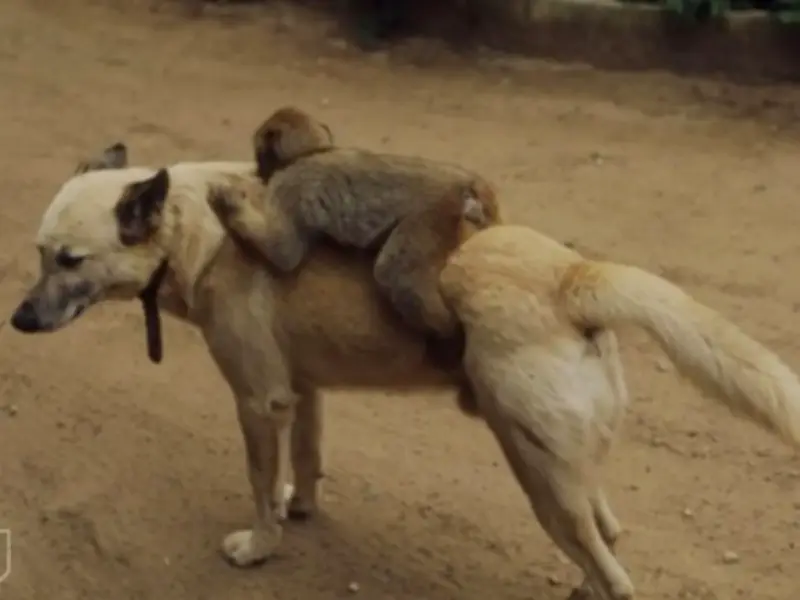
Researchers at the University of Oxford have discovered that non-human primates often interact with other animals in ways similar to how humans keep pets. The study found that monkeys and apes play with and groom lizards, deer, birds, squirrels and even dogs.
88 Primate Species Display Pet-Like Behaviour
The behaviour was observed across 88 different primate species. Examples include chimpanzees grooming red-tailed monkeys, macaques playing with chickens, and capuchins nursing an abandoned marmoset for several months.
Younger primates were more likely to play with other animals, while adult females more commonly took on nursing or caring roles with different species. Adult males rarely interacted with other species, and when they did, these encounters were often marked by extreme aggression, according to the study.

Evolutionary Roots of the Behaviour
Researchers hypothesised that the behaviour comes from an evolutionary, in-built desire for closeness, the absence of which can produce the feeling of loneliness.
Lead author Cyril Grueter recalled: “The gibbon took very good care of the mouse. The mouse also seemed comfortable resting on the gibbon’s hand.”
Grueter added: “There is no non-human primate behaviour that is completely identical to humans keeping pets. However, these behaviours may provide clues to how human pet keeping evolved.”
Punch the Monkey's Viral Bond
The study noted the case of Punch the macaque, who went viral for his bond with a cuddly toy. Punch was seen in videos wandering alone with the toy after being pushed away by other monkeys at a zoo in Japan. He clutched it tightly while being harassed, dragged and chased by other animals in the group.
When other monkeys shooed the baby away, Punch rushed back to the toy orangutan, hugging it for comfort. The video earned the primate millions of followers online.