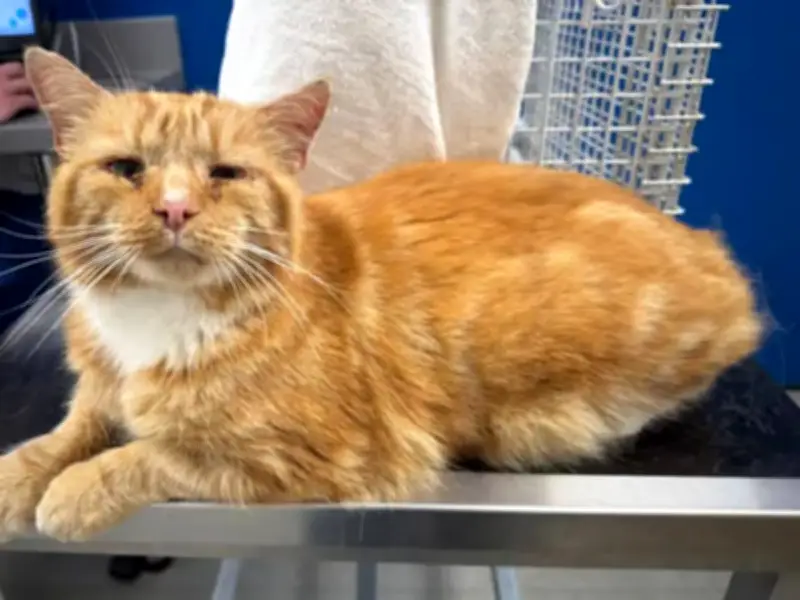
A missing cat has been reunited with his owner almost a year after vanishing, having been discovered 86 miles away living among a feral cat colony. Ginge, a sociable ginger tom from Sunderland, was found in Garforth, Leeds, by animal volunteer Lucy Roche, who instantly sensed he was not just an ordinary stray.
Microchip scan reveals owner
The Cat Action Trust 1977 branch leader successfully captured the cat and brought him to a vet, where a standard microchip scan uncovered the remarkable discovery: Ginge belonged to a family in Tyne and Wear, the Mirror reports. Ms Roche said the owner was in a "flood of tears when she called to tell her he had been found and could not believe her missing pet was coming home."
Volunteers at the colony had been regularly providing food and water for Ginge since he first appeared at the site several weeks prior. "I was stroking him and I thought he's so friendly he could be somebody's cat", Lucy said. She eventually managed to capture Ginge using a humane trap before bringing him to the vets, where his microchip revealed his owner's details.

Emotional reunion goes viral
The long-lost moggy then spent the evening at Lucy's house while his family made the journey to collect him. "He was snuggled up next to me and was flat out snoozing because he was so tired. I don't think he's had a good night's sleep in ages", Lucy added. A touching video shared on social media captures the heartwarming moment when Ginge's owner, Beth, is reunited with her beloved cat the following day, subsequently gaining worldwide attention.
Lucy continued: "We've had people from America, New Zealand saying what a wonderful story it is. The support has been overwhelming." She explained that Ginge's tale also highlighted the crucial importance of microchipping cats, as it proved to be the sole method by which the charity could locate his family. Microchipping became compulsory for pet cats in England in 2024.
Charity's ongoing work
Volunteers from Cat Action Trust 1977 regularly visit feral cat colonies throughout Leeds, providing sustenance, water and warm shelter, while also organising veterinary treatment and neutering when required. Cats may also be relocated if their current environment is deemed dangerous, either to new homes or rural locations such as farms.
Lucy revealed that the Leeds branch, operated entirely by volunteers, was fielding "non-stop calls for help" on a daily basis. She continued: "So many cats are getting abandoned, lost or injured. We just want to make life better for all cats."