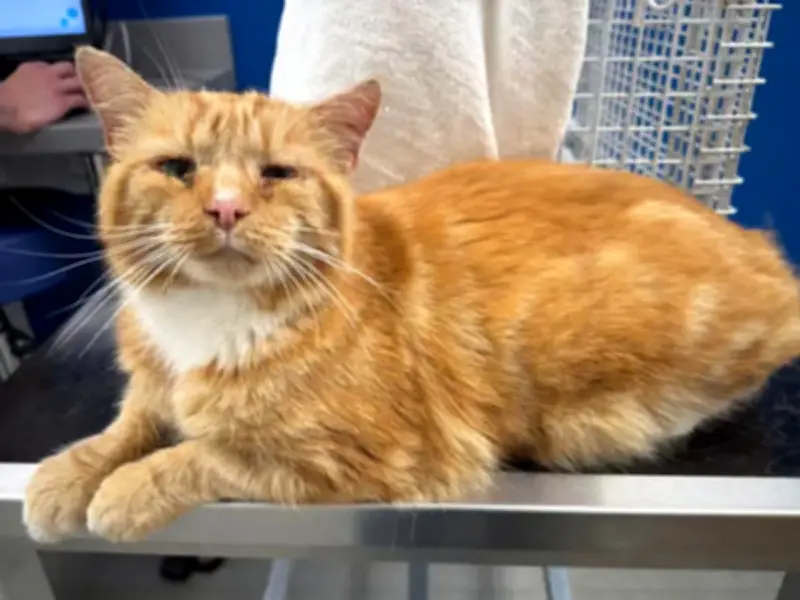
A missing cat has been reunited with his emotional owner almost one year after disappearing from home. Ginge was found living among a feral cat colony in Garforth, Leeds, after volunteer Lucy Roche noticed the friendly ginger cat seemed far too tame to be a stray.
Lucy, branch leader for Cat Action Trust 1977, managed to catch him safely and took him to a vet, where a microchip revealed he belonged to an owner more than 86 miles away in Sunderland, Tyne and Wear. She said Ginge’s owner was in a “flood of tears” when she called to tell her he had been found and could not believe her missing pet was coming home.
How Ginge was found
Ginge had first appeared at the colony a few weeks earlier, where volunteers regularly provide food, water and shelter for feral cats. Lucy said: “I was stroking him and I thought he’s so friendly he could be somebody’s cat.”

She was able to catch Ginge in a humane trap before taking him to the vets, where his microchip led them to his owner. Ginge then spent the night at Lucy’s home while they waited for his family to collect him. She said: “He was snuggled up next to me and was flat out snoozing because he was so tired. I don’t think he’s had a good night’s sleep in ages.”
Emotional reunion
The following day, Ginge was finally reunited with his owner, Beth, in an emotional moment captured on video and later shared on social media. The heartwarming reunion has since attracted attention from around the world. Lucy added: “We’ve had people from America, New Zealand saying what a wonderful story it is. The support has been overwhelming.”
She said Ginge’s story also showed the importance of having cats microchipped, as it was the only reason the charity had been able to trace his family. Microchipping became a legal requirement for pet cats in England in 2024.
Charity work continues
Cat Action Trust 1977 volunteers visit feral colonies across Leeds to provide food, water and warm shelters, while also arranging veterinary care and neutering where needed. Cats can also be rehomed if the area they are living in is considered unsafe, either with new owners or in rural settings such as farms.
Lucy said the Leeds branch, which is run entirely by volunteers, was receiving “non-stop calls for help” every day. She added: “So many cats are getting abandoned, lost or injured. We just want to make life better for all cats.”