Thorpeness Residents Demand End to 'Trauma Tourism' as Coastal Erosion Forces Home Demolitions
Furious locals in the upmarket village of Thorpeness, Suffolk, have issued a stern warning to so-called 'trauma tourists' who are flocking to witness clifftop homes at risk of falling into the sea or being demolished. They insist these sightseers should stay away, branding their behavior as disrespectful and invasive during a time of profound personal loss for homeowners.
Intrusive Behavior and Theft Reported
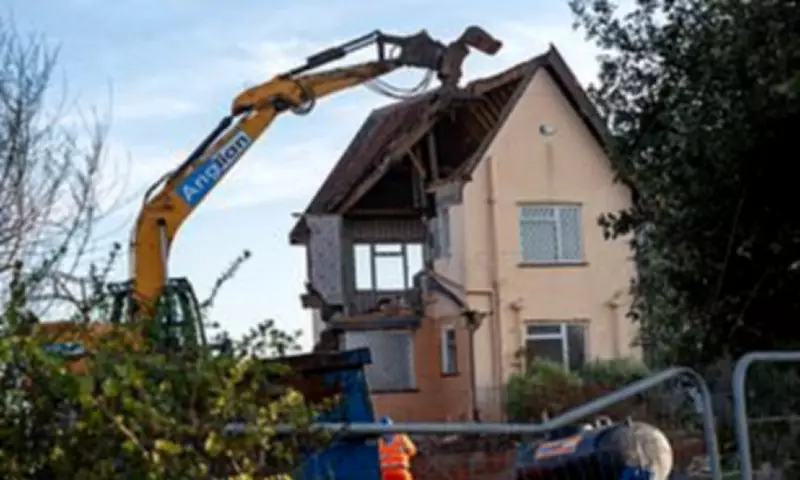
Appalled residents have revealed that some visitors have posed as workers or relatives to gain unauthorized access to properties, even stealing mementos such as ornamental flower pots. Others have been observed taking photographs and videos of the demolition work, with a steady stream of day trippers walking along North End Avenue to capture the scenes. In more extreme cases, drones have been flown to obtain aerial pictures, despite a strict Civil Aviation Authority ban due to the area's proximity to the Sizewell power station exclusion zone.
Heartbreaking Losses for Homeowners
The coastal erosion crisis has already led to the demolition of four homes this winter, with work set to begin on another six properties starting Monday. Among the recent victims is 89-year-old Shelley Cowlin, whose home of 48 years was razed to the ground this month, forcing her into temporary holiday accommodation. She expressed her dismay, stating, 'We don't want people relishing in glee at the tragedy of other people.' Mrs. Cowlin recounted instances where strangers claimed to be her gardener or grandchildren to infiltrate her land, questioning their motives and labeling them as 'a bit peculiar.'

Another resident, 88-year-old Jean Flick, lost her four-bedroom house in October, which would have been valued at up to £1.7 million if not for the erosion threat. She shared her emotional turmoil, saying, 'My heart will just break because it's my home.' Homeowners in Thorpeness face not only the loss of their properties but also significant financial burdens, receiving a mere £6,000 grant for moving expenses while demolition costs can soar to £60,000.
Community Outcry and Official Responses
Bill Seale, vice chairman of Aldringham-cum-Thorpe parish council, highlighted the distress caused by onlookers, noting, 'There is plenty of rubber necking going on. It is pretty horrific really. People who are losing their homes are suffering enough.' He described one woman who had to endure stares from passersby as she moved her possessions out of her doomed home. Parish council clerk Shirley Tilbrook added that while efforts are made to keep people away, it is challenging to prevent visitors entirely, as the area remains accessible to residents.
More than 150 people attended a recent meeting organized by Suffolk Coastal MP Jenny Riddell-Carpenter to discuss the 'soul destroying' losses in the community. She emphasized the accelerated rate of erosion since Christmas, leaving families facing the worst-case scenario. Despite attempts to protect homes with sandbags, East Suffolk Council, responsible for 48 miles of coastline, allocated only £750,000 for sea defences last year. A council spokesman urged the public to be considerate, stating, 'We would urge people to be considerate to the local community and refrain from visiting the affected area wherever possible.'
Historical Context of Thorpeness
Thorpeness was originally developed as a dream project by wealthy Scottish barrister Glencairn Stuart Ogilvie, transforming from a fishing hamlet into a playground for family and friends. Its features include Thorpeness Meare, a shallow lake covering over sixty acres, inspired by Neverland and designed with input from Peter Pan author J.M. Barrie, a close friend of Ogilvie's. This historical charm contrasts sharply with the current devastation, as the village's sandy coastline continues to erode under bad weather and high tides.