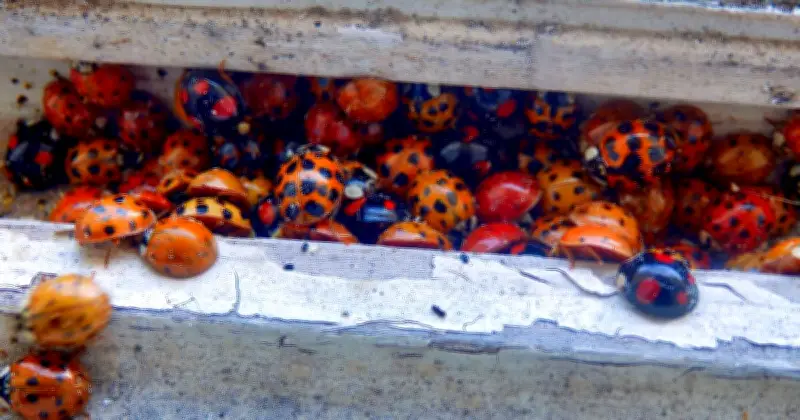
Swarms of ladybirds carrying sexually transmitted diseases are invading homes across the UK, with experts urging households to shut their windows and doors to keep them out. The insects, which include non-native Harlequin ladybirds, are seeking shelter indoors as the weather turns colder ahead of winter.
Many people have reported seeing hundreds of the shiny red beetles climbing their walls, windows and doors. On Reddit's r/BritishProblems, one user, u/Hollyisthedog, said: "Having to shut every window, vent and door so you don't get bombarded by ladybirds. Damn things are still getting in though."
Reports from across the country
Others have echoed similar experiences. One user said: "I'm in south Staffordshire and literally every time I go into the kitchen at the moment there's a new ladybird." Another reported: "There were swarms of them this weekend. I'm in West Yorkshire."
A third added: "I'm in Greater Manchester and when I got home from work today my house was covered in them. All over the walls, windows and doors. I've never seen anything like it."
Why ladybirds are coming indoors
One poster, u/Silent-Detail4419, explained: "Lady beetles. You're seeing them more because the weather's becoming cooler, and they're looking for places to hibernate. The ones coming into your house will be Harlequin ladybirds, because our native ladybirds hibernate under logs, tree litter and rocks but because Harlequin ladybirds have been introduced from warmer climes, they seek out houses. They tend to start coming in at the beginning of October, which is why you're seeing them now."
This explanation is backed up by experts at The Natural History Museum. Max Barclay, Senior Curator of Beetles at the Museum, says: "There are a number of species of ladybirds that hibernate in big clusters. Ancestrally harlequin ladybirds would probably have hibernated in big clusters in caves, hollow trees and other sheltered places. In absence of these they may well try and gain entrance to your home. The easiest way for them to do this is through the small gaps along the edges of loose-fitting windows."
STDs and impact on humans
Currently, harlequin ladybirds are mainly found in the south-east of the country, though they have slowly been pushing further north into the Midlands, and they carry sexually transmitted diseases. Fortunately, Max confirms these cannot pass to humans.
Max adds: "It is a fungus that forms little scales on the wing cases on the outside of the ladybird. You can actually see it with your naked eye and so can tell whether the ladybird is infected. It just looks like a yellow crust on some parts of the ladybird's exoskeleton."
While the disease is thought to have a limited impact on some native species, the invasive ladybird is now so well-established that it is effectively here to stay. Max adds: "These are not anything to panic about. First off they can't give you diseases, they can't hurt you and they're not going to completely exterminate our native fauna. They are going to find some kind of balance, even if that includes them in reasonably large numbers."
To stop the insects from entering homes, the Natural History Museum says doors and windows should be fully sealed and insulated.