
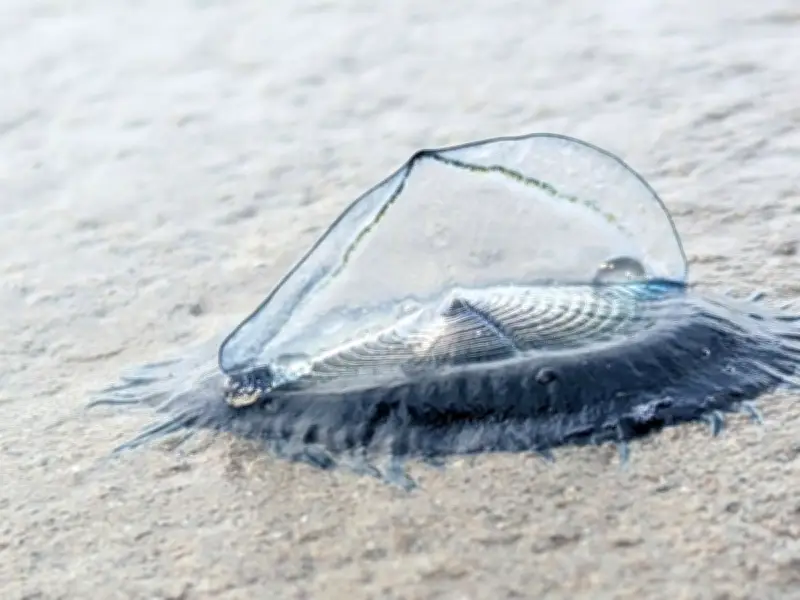
Hundreds of tiny blue marine creatures, scientifically known as velella velella and commonly called by-the-wind-sailors, have washed up on a beach at Criccieth in Wales, astonishing beachgoers with their otherworldly appearance. The colony was discovered on Monday, July 6, 2026, and has been described as looking like 'something from space'.
What Are By-the-Wind-Sailors?
Despite being frequently mistaken for jellyfish, by-the-wind-sailors are actually a type of hydroid, a colony of tiny individual animals working together. They are similar in structure to the Portuguese Man O'War, a poisonous fish also found in Welsh waters, but are not considered 'true jellyfish'. The creatures use their stinging tentacles to capture prey as they sail along the ocean surface.
According to the Wildlife Trust, the by-the-wind-sailor is an 'incredibly strange and beautiful species'. They typically grow to a maximum length of 10cm and are characterized by a deep bluey-purple oval disc, known as a float, with a thin, semi-circular fin (sail) attached diagonally across the top. Tiny short tentacles hang down from the float into the water below.
Unusual Summer Sighting
While by-the-wind-sailors are commonly found floating on the surface of the water, they are most often observed from September to March. Their appearance in July is unusual and has drawn attention from both locals and scientists. Very little is known about the mysterious creature, but they are known to wash up in large numbers—sometimes hundreds or even thousands—after stormy weather, particularly during winter when harsh winds drive them ashore.
The Wildlife Trust notes that these animals are 'incredibly strange and beautiful', and their sudden appearance on Welsh beaches has sparked curiosity. Kev Wardlaw, who spotted the creatures, remarked: 'Very small—the biggest I saw was only a couple of inches. I've never seen one before, now I've seen hundreds!'
Impact and Observations
The mass stranding of by-the-wind-sailors at Criccieth highlights the dynamic nature of marine life along the Welsh coast. While not harmful to humans, their stinging tentacles can cause mild irritation, so beachgoers are advised to avoid touching them. The event serves as a reminder of the diverse and often mysterious species that inhabit UK waters.




