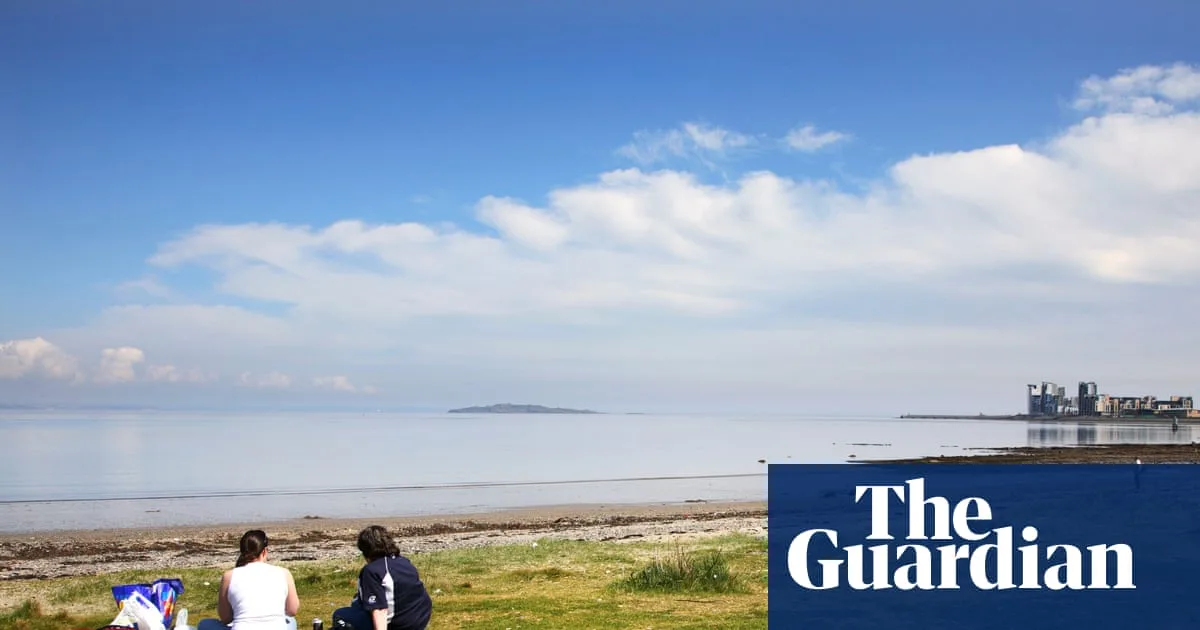
Up to half of coarse sediments on some UK urban beaches may consist of human-made materials such as brick, concrete, glass and industrial waste, a study has suggested. Researchers from the University of Glasgow surveyed six sites on the Firth of Forth in Scotland, finding that an average of 22% of coarse sediments were what they called 'anthropogenic geomaterial'. On Granton beach near Edinburgh, this figure reached as high as 50%.
The study, published in the journal Sedimentology, indicates that waste dumping and climate breakdown have contributed to the rise. More frequent and destructive coastal storms have swept materials from land into the sea. The researchers used a systematic method to collect and analyse sediment from beaches at Torryburn, Ravenscraig, the Fife coastal path, Carriden, Granton and Prestonpans.
This phenomenon is not limited to Scotland. On Crosby beach in Merseyside, waste from collieries and the Blitz now forms a large part of the sand. In the Thames estuary, bricks that have rounded over time are known as 'Thames potatoes'. Lead author Professor Larissa Naylor said: 'Beaches are not static landforms – they change. How does a brick become a Thames potato? It's not all just about marine plastics.'
The team called for a new scientific classification of 'anthropogenic sand and gravel' beaches and urged further research on urban coastal areas. Naylor added: 'Research like this casts a new light on how human activity is affecting the natural world.'