A headteacher's split-second decision to evacuate a school in Nepal saved about 900 pupils from a devastating flood. Rajendra Dawadi from Tribhuvan Trishuli Secondary School in Nuwakot said he received four warnings within minutes, including reports that floodwater had crashed through a settlement upstream. Mr Dawadi's school evacuated to higher ground as water swept over a hostel some 100 metres away from a river.
Evacuation decision praised
He told the BBC: "If we had made the decision 10 minutes later, all of us, including the students and me, would not be able to speak to you today." A 16-year-old pupil from the school, identified only as Yunisha, said she survived "by just 10 seconds" and saw a bazaar swept away.
Flood aftermath in Nepal and Tibet
At least 800 people died and over 3,000 are reported missing in Nepal and Tibet after catastrophic flash floods and mudslides on Wednesday (August 26). The missing include hundreds of people from over a dozen countries, including the UK, who were in the region to work, visit the mountains or make a pilgrimage to a sacred peak.

So many people were washed downstream that authorities in one Nepalese district have begun burying bodies in temporary graves before they can be identified. Authorities in Nepal warned of possible fresh flooding on Sunday and urged residents in flood-affected areas to remain on high alert after water levels rose in the Bhotekoshi River.
Residents return to ruined homes
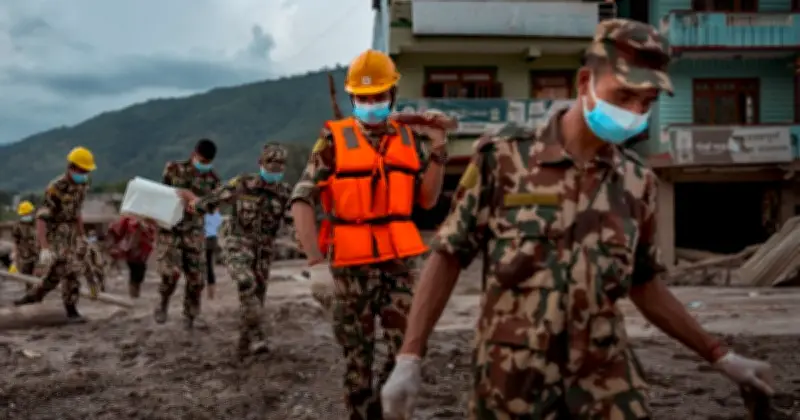
In Dhading, one of the worst-hit regions of Nepal, some locals began returning to ruined homes to see what could be salvaged. Sharmila Tamang, a Dhading resident, said: "Everything is finished. Nothing is left. Not even our home." Along the river, homes, cars and farm vehicles could be seen jutting from the thick grey-brown sediment which enveloped entire villages in some spots.
Rice terraces along the banks of the river fell into it after they were hit by huge landslides. Homes and businesses left standing after the flooding were still without electricity on Sunday, as twisted power line poles and wires lay tangled in the mud.
Glacial collapse triggered floods
Flash floods started after a glacial collapse high in the Himalayan region. Scientists studying satellite images said bedrock underneath a glacier high in the region had collapsed, taking part of the mass of melting water with it. The rockfall was so extreme that it registered as magnitude 5.2. The rocks and melted water then swelled rivers in the valleys below, causing a torrent of water which swept buildings, bridges and earth downstream in Tibet and Nepal.
Nepal's Foreign Minister Shisir Khanal called for a global response to climate change, saying his country was bearing a disproportionate share of its impact. He said on Saturday: "Despite having only 0.1 percent contribution to the global emissions, people of Nepal have become major victims of climate change."
Scientists have said it is too early to draw a direct link between global warming and the catastrophe. But they said that as Earth's temperature rises because of human activities such as burning oil, gas and coal, the chances of such disasters increase. This is especially the case in the Himalayas, which are warming considerably faster than many other parts of the world.