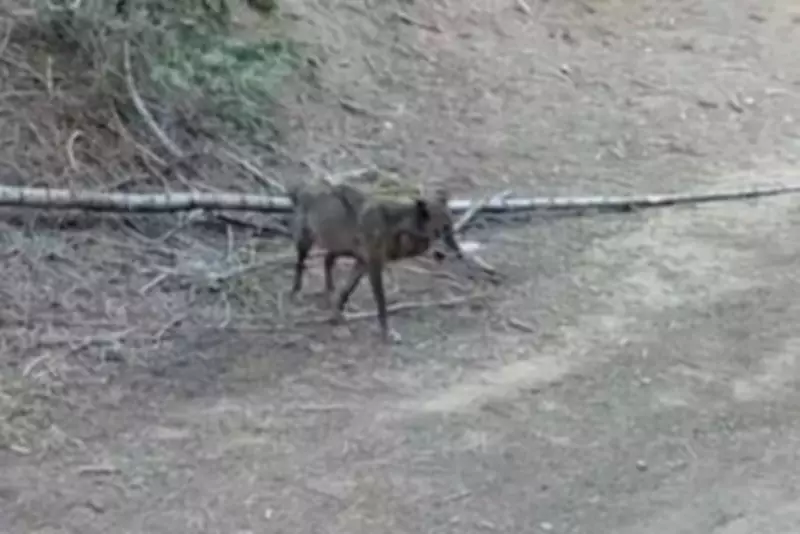
Historic Gray Wolf Sighting in Los Angeles After Century-Long Absence
A gray wolf has been observed in Los Angeles County for the first time in more than 100 years, according to a recent report. The three-year-old female wolf, identified as BEY03F, was spotted in the mountains north of Santa Clarita at approximately 6 a.m. on Saturday. Axel Hunnicutt, the gray wolf coordinator for the California Department of Fish and Wildlife, provided details to the Los Angeles Times, noting that just four hours earlier, the same wolf had been seen in the desert south of Kern County.
Tracking the Wolf's Journey
Officials have been able to monitor BEY03F's movements thanks to a GPS collar that was fitted on her in May of last year. Hunnicutt explained that the wolf is actively seeking a partner, and her continued travel indicates she has not yet found a mate or suitable habitat. Born in 2023 in Plumas County's Beyem Seyo Pack, BEY03F has journeyed over 370 miles southward, showcasing an impressive dispersal pattern.
A Milestone in Wildlife Recovery
John Marchwick, a writer for the nonprofit California Wolf Watch, described the sighting as "a historic moment in the return of wolves to California." He attributed this resurgence to the state Department of Fish and Wildlife's diligent monitoring efforts and the protections afforded under the California Endangered Species Act. Historically, California's wolf population was eradicated by hunters and trappers around a century ago, but wolves began reappearing in 2011 when one crossed the border from Oregon.

Today, officials estimate there are at least 60 wolves in California. As of Sunday, BEY03F was believed to be in the San Gabriel Mountains, an area without known established wolf packs. However, she might encounter potential mates in the Tehachapi Mountains or continue northward along the Sierra Nevada, possibly traveling hundreds more miles before settling.
Challenges and Risks
Hunnicutt highlighted the dangers associated with the wolf's extensive travels: "The one thing that we do know is the more that she moves, the more that she has to encounter human infrastructure, and particularly highways. And we know that in California, the highest known cause of mortality for wolves is vehicle strikes." This underscores the ongoing challenges for wildlife conservation in urban and suburban landscapes.
The sighting of BEY03F not only marks a significant ecological event but also emphasizes the importance of continued conservation efforts to support the recovery of gray wolves in California.