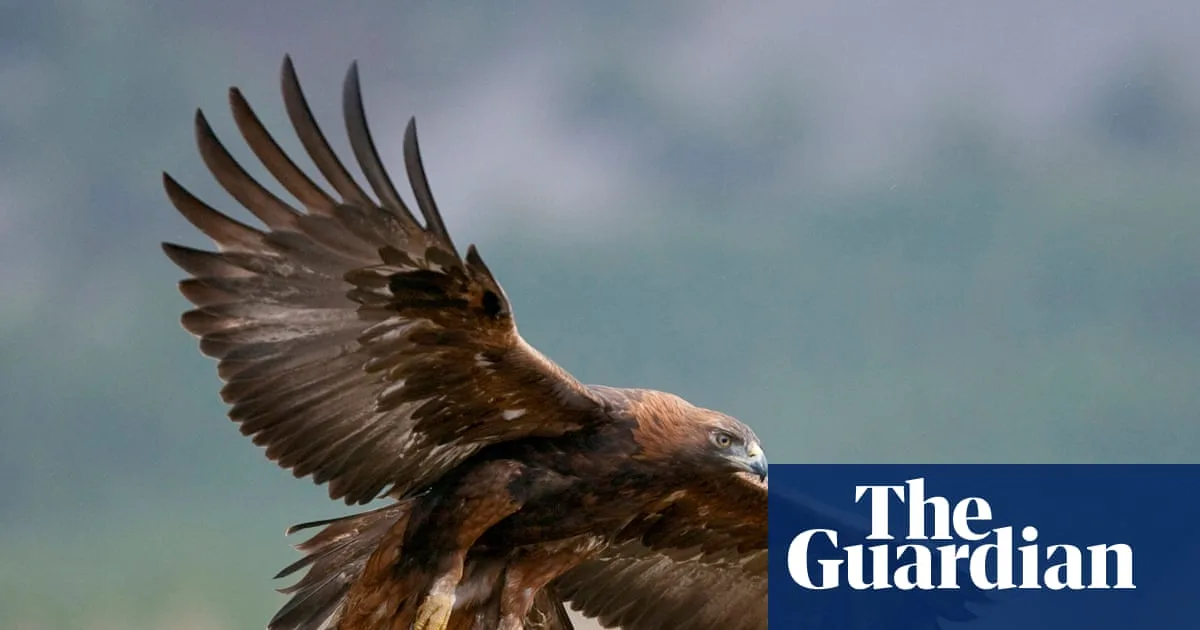
Golden eagles could be reintroduced to England for the first time in more than 150 years after a study identified eight potential recovery zones, mostly in the north of England. The government has approved £1m in additional species recovery funding to support the programme, which could see juveniles released as early as next year.
The golden eagle, once common in Shakespearean England and mentioned over 40 times in his works, has been largely absent from English skies. The last native golden eagle is thought to have died in 2015 in the Lake District, after centuries of persecution by gamekeepers and farmers who viewed them as a threat to livestock.
A feasibility study by Forestry England, published on Sunday, found that England now has the capacity to sustain golden eagle populations once again. The paper identified eight recovery zones as the most suitable areas, though it could take more than a decade for breeding populations to become established.
Environment secretary Emma Reynolds said: “This government is committed to protecting and restoring our most threatened native wildlife – and that includes bringing back iconic species like the golden eagle.” The funding is part of a £60m species recovery package announced by the Department for Environment, Food and Rural Affairs (Defra).
In southern Scotland, golden eagle populations have recovered to record numbers thanks to a major restoration project. Satellite tracking shows some translocated birds have already begun flying across the border into northern England. Forestry England hopes the new funding will help these birds settle south of the border, alongside targeted reintroductions.
Mike Seddon, chief executive of Forestry England, said: “The detailed findings of our feasibility study will guide us to take the next steps to explore the recovery of golden eagles in northern England.” The work aligns with the UK’s legally binding target to halt species decline by 2030 and reduce extinction risk by 2042.