
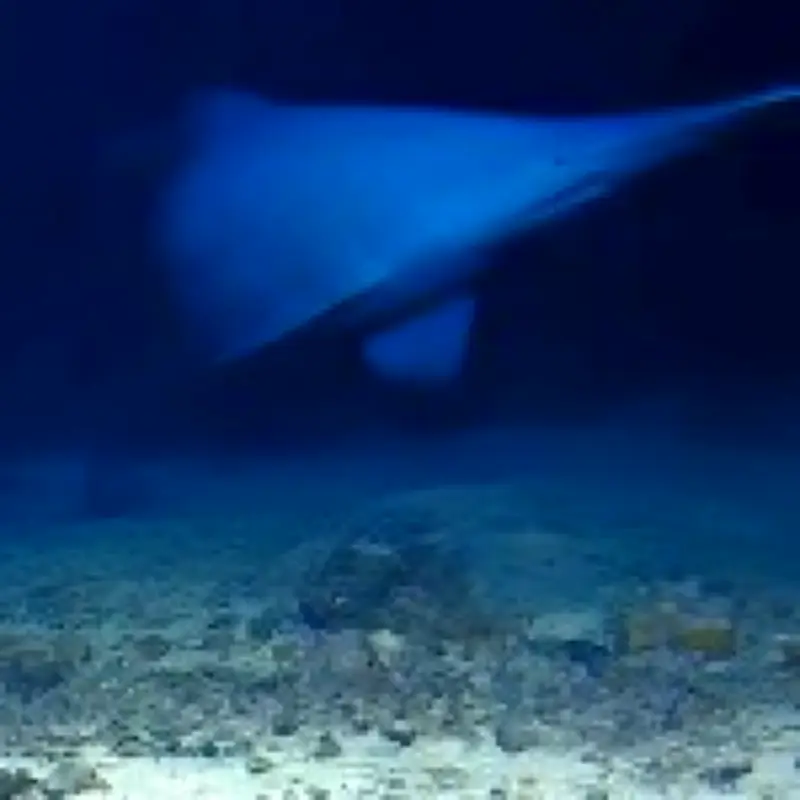
One of the world's strangest sharks has been filmed alive in its natural habitat for the first time. The bizarre-looking goblin shark – often dubbed the 'ugliest shark on the planet' because of its protruding snout and terrifying extendable jaws – has previously only been seen alive after being accidentally caught by fishermen and hauled to the surface. But now scientists have recorded two live sightings of the rare deep-sea predator swimming freely thousands of feet below the ocean.
Breakthrough Discovery
The breakthrough was reported by researchers from the University of Hawaii at Mānoa in the Journal of Fish Biology. Lead author Aaron Judah discovered the first sighting after hearing colleagues mention a possible goblin shark encounter during a 2019 expedition. The mission had been exploring deep-sea ecosystems near Jarvis Island, a protected wildlife refuge around 1,305 nautical miles south of Honolulu.
Aaron Judah said: 'I was shocked to hear this because this species was not known to be in the Central Pacific.' After reviewing footage from the expedition, he confirmed the team had indeed captured video of a goblin shark during a livestreamed dive northwest of the island. A second encounter came in 2024 when researchers exploring the Tonga Trench recorded another goblin shark using a baited deep-sea camera.
Researcher Reactions
Professor Alan Jamieson, founding director of the Minderoo-UWA Deep-Sea Research Centre, said: 'The goblin shark is one of these deep-sea charismatic animals that I never thought we'd see alive. To do so was amazing, but then to learn that colleagues in Hawaii had also seen one was just incredible.'
The discoveries have revealed that the species lives both deeper and farther across the Pacific than scientists previously believed. Aaron Judah said seeing 'the most iconic of all deep-sea sharks' alive and looking healthy in its natural habitat 'was a unique honour.' He added: 'I was also very surprised about how deep this species was found. The observation from the slope of the Tonga Trench is nearly 700 metres deeper than this species was known to live.'
Implications for Conservation
Researchers say the findings significantly expand the known geographic range of the species and could help improve conservation efforts. Judah said: 'New discoveries like this demonstrate that there is still so much to explore in our deep-ocean home. Given the newly expanded geographic range of the goblin shark, this species can be included in regional management and a nation's biodiversity list, whereas beforehand we didn't know it was even there.'




