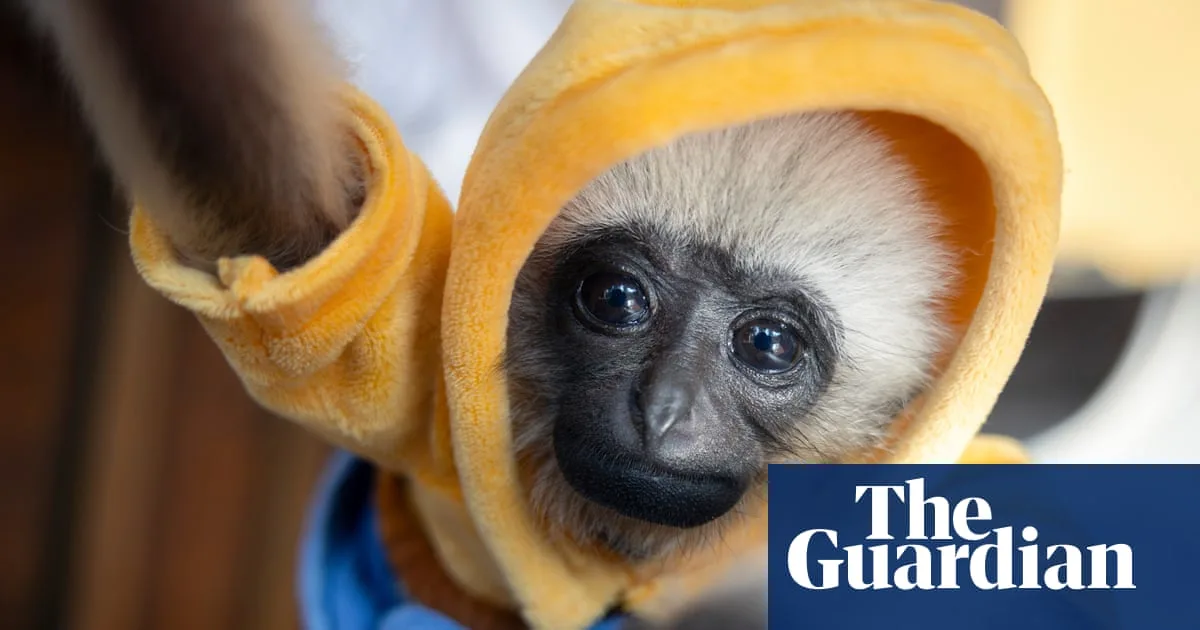
A wildlife officer in northern Thailand cradles an infant gibbon named Chokdee, rescued after being found alone in a village. Karin Hirankailas, head of the Omkoi wildlife sanctuary, believes the mother was likely killed by poachers. Chokdee is a lar gibbon, one of 20 species of small arboreal apes native to Southeast Asia.
According to the International Union for Conservation of Nature, all gibbon species are threatened, with five critically endangered. Alongside habitat loss, the main threat is poaching for the illegal exotic pet trade, which is growing. Traffic analysis shows trafficked gibbon seizures reached an all-time high in 2025, with Thailand heavily affected.
Poachers target infants, which are easier to capture and domesticate. Susan Cheyne, vice-chair of the IUCN's small apes section, says about 70% of gibbons in the trade are under two years old. The trade increasingly occurs online; in Indonesia, over 800 infant gibbons were advertised on Facebook between 2015 and 2019.
Gibbons are monogamous and live in small, tightly bonded family groups. Their loud duet calls, which help maintain pair bonds, also make them easy for poachers to track. Chanpen Saralamba, a biologist at Mahidol University, has observed males deliberately distracting researchers to protect their families. However, these behaviours offer little defence against armed poachers.
Cheyne's research suggests each captured gibbon results in the death of three or four others, as taking an infant requires killing the mother and possibly other family members. The killing of a mother typically causes the family to break down, devastating wild populations far beyond the number of infants traded.