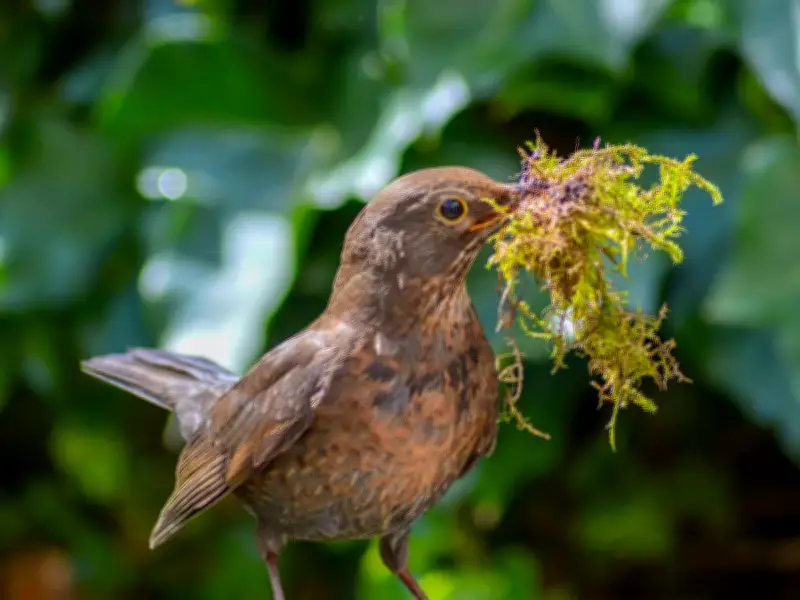
Gardeners planning to prepare their greenery for winter could still risk breaking the law if they disturb any bird nests, even as September usually marks the end of nesting season for most birds in the UK.
Legal protection for nests
All birds, their nests and their eggs are protected by law in England and Wales under the Wildlife and Countryside Act 1981. This makes it an offence for people to deliberately take, damage or destroy the nest of any wild bird while it is being built or used.
The law includes any bird that has not been bred in captivity, and even then some may still qualify if they had been lawfully released into the wild as part of a re-population or re-introduction programme. It also prohibits deliberately taking, damaging or destroying any bird eggs from these nests.

What to do if you find a nest
March through to September is the main nesting season for birds in the UK, so any gardeners making drastic changes during these months should be wary and check for nests. If you are already aware of a nest in your garden, check if it is in use before taking action.
The Royal Society for the Protection of Birds (RSPB) advises: “The best way to help your garden birds is to not cut your hedges between March and September as this is when the possibility of birds nesting is very high.
“So, we recommend only cutting between 1 September and 28 February. And during that time, we also recommend you still check for nesting birds, as some may start early in January or February or breed late into September.”
How to check if nests are being used
The RSPB recommends taking three steps if you plan to cut vegetation in your garden at any time of year starting with just watching the area for a few days before taking action. At all stages of nesting, birds will fly in and out of the nest constantly.
However, if the birds leave early in the morning and only return to the spot at night, they are likely just using it as a spot to sleep in and not necessarily a nest. Before you begin cutting, do a thorough check through the area to make sure you cannot see any active nests.
Finally, use manual cutting tools instead of electric ones. These are easier to control and stop if any wildlife appears while you are in the middle of trimming.
What if there is a nest in your home
It is still illegal to remove, damage or destroy a bird nest even if it is in an inconvenient spot. The RSPB advises: “You must allow the chicks to leave the nest before taking any action to remove a nest or block an entrance to it.
“Don't start building work on your home if you know birds are nesting, and if you do discover a nest during construction, it is best to leave it alone where possible. If construction work can’t be paused until the young have flown the nest, contact Natural England/Nature Scot/Natural Resources Wales/Daera for advice.”