
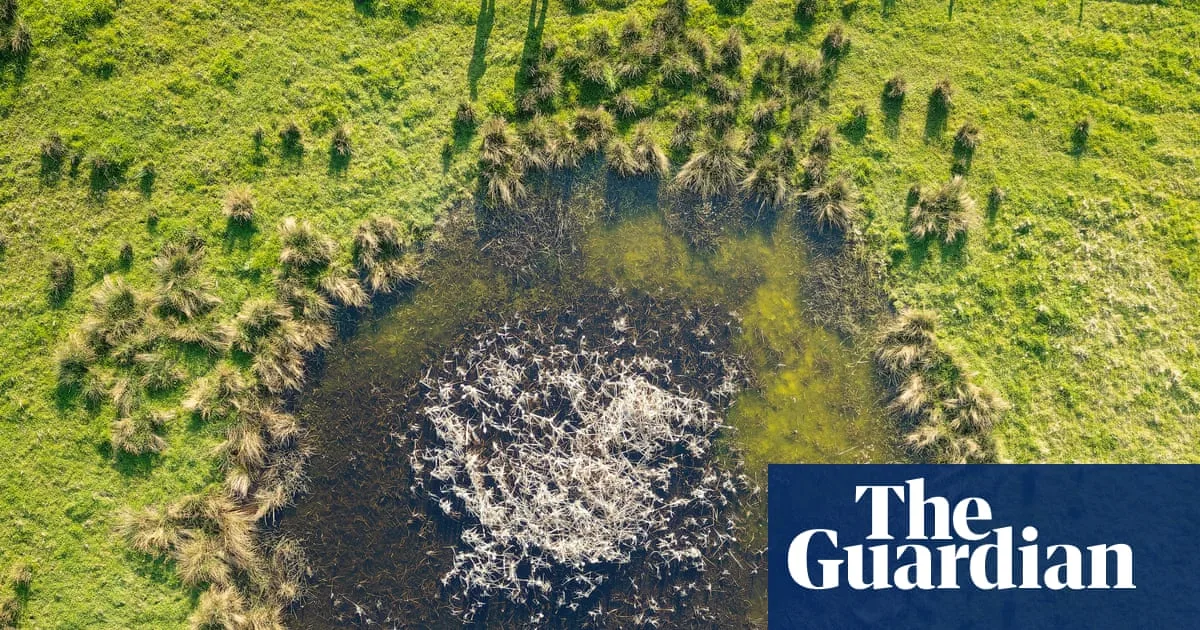
In east London, a pond created by a German V2 rocket strike in 1945 has become a vital wildlife haven. Bomb Crater Pond on Walthamstow Marshes now hosts rare plants, amphibians and insects, demonstrating nature's resilience in the face of destruction.
Luke Boyle, a ranger for the Lee Valley Regional Park Authority, said the pond 'punches above its weight' despite its small size. Left untouched after the explosion, it filled with water and sediment, developing into a self-sustaining ecosystem that supports species such as creeping marshwort, one of Britain's rarest aquatic plants.
The pond is part of a site of special scientific interest, with clear waters that provide year-round refuge for wildlife. Unlike managed wetlands, its natural depth and lack of sluice gates allow it to hold clean water throughout the year, benefiting cattle and creating diverse habitats through their hoof disturbance.
Professor Jeremy Biggs of Freshwater Habitats Trust noted that small ponds are often underestimated. 'Ponds are powerful precisely because they are small,' he said, adding that they support more rare species than larger water bodies. He drew parallels with bomb craters in Ukraine, where scientists are observing how nature quickly recovers after Russian attacks.
The pond's resilience mirrors broader ecological patterns. 'It's like an engine room for the marshes,' Boyle said, highlighting how a scar of war has become a cornerstone of biodiversity in an urban landscape.




