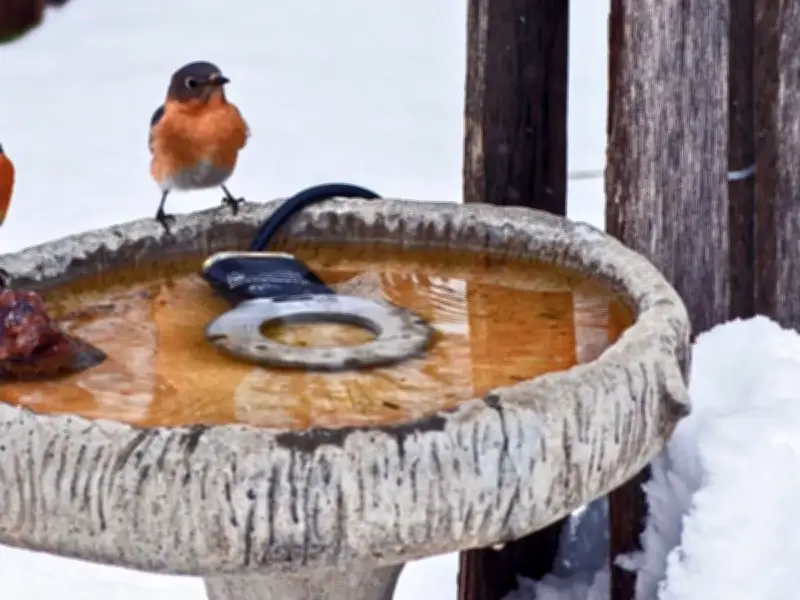
As temperatures drop below freezing in late November, birdbaths can quickly ice over, but a floating ball is a simple way to keep the water accessible for garden birds. April Dowling from Dave's Garden explained: "Place a tennis ball or rubber ball in the birdbath, allowing the ball to float around and break up fresh ice that begins forming."
Why Keeping Water Ice-Free Matters
Leaving a frozen birdbath alone can put visiting birds at risk, as dirt and droppings become trapped beneath the ice. Repeated freezing and thawing can also encourage germs to build up in the water, potentially making birds ill and reducing their chances of surviving winter.
How to Use the Ball Method
Late November to early December is the ideal time to try this method, as temperatures are just beginning to drop and the movement can help break up small patches of ice before the water freezes over completely.
To get started, find a clean ball that has not been left sitting outside in the garden and gently place it on the water so it can float freely. It is also worth checking the birdbath each morning, when birds are more likely to visit, to ensure the water remains accessible and free of ice.
Other Tips for an Ice-Free Birdbath
The floating ball trick works best at the beginning of winter and is unlikely to be effective once nighttime temperatures reach -4C. Positioning the birdbath near a south-facing fence or hedge can provide shelter from cold winds while allowing it to benefit from the warmth of the sun.
Topping up the water with lukewarm water each morning can melt any ice and help keep it above freezing for longer. Once temperatures drop further, regular cleaning becomes especially important to prevent bacteria from building up, and a little white vinegar can make cleaning the basin much easier.
Although keeping a birdbath in good condition during winter takes some extra effort, it is a simple way to support local wildlife and enjoy the sight of birds visiting your garden, even on the frostiest mornings.