
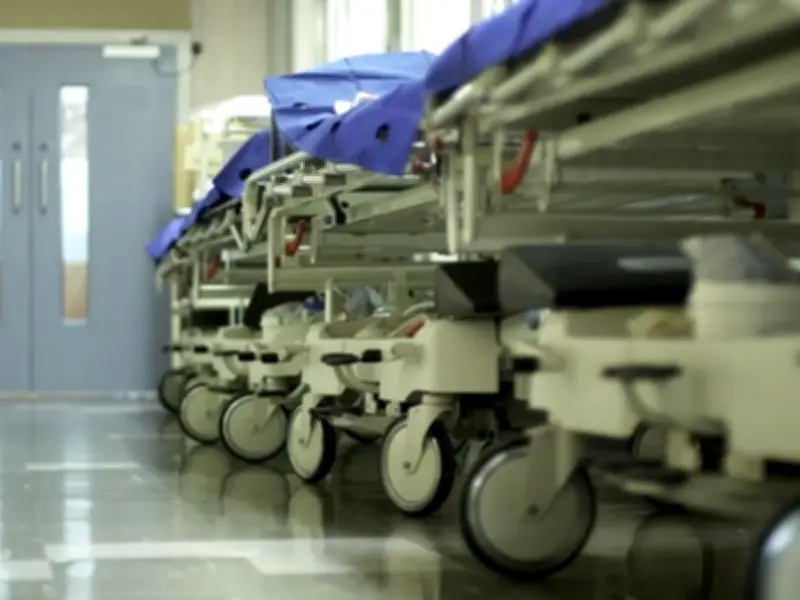
The NHS is bracing for its busiest ever winter, with hospital trust bosses admitting that rising numbers of sick and injured patients arriving at A&E departments is “scary”. Hospitals enter the colder months struggling with record patient numbers and many people waiting in corridors.
Critical incidents and stretched services
Critical incidents have recently been declared at hospitals in Derby and Nottingham, as well as across 999 services in London. One chief executive of a major NHS trust operating several hospitals said he feared some services would be “overwhelmed”. Speaking anonymously, he said: “Our services are stretched to their limits. Last winter was the busiest winter on record. This winter will be busier, therefore this winter will be the busiest on record.”
He added: “We've got a growing demand problem. The trust I work in, we've had an 8% growth and emergency department activity over the last year, and there's clearly growing mental health need. Many trusts are declaring critical incidents simply because of the pressure they're experiencing.”
University Hospitals of Derby and Burton NHS Foundation Trust became the latest hospital group to declare a critical incident. Patients at Royal Derby Hospital face average nine-hour waits in A&E, with the trust blaming rising admissions for winter bugs such as flu.
Demand driven by an ageing population
One chief executive of a major community NHS trust said “demand is growing faster than probably anyone imagined”. They added: “I think the number of 65s and over 85s from the population projections is, frankly, scary, in terms of the numbers that are going to come through.”
Almost one in five people in England are aged over 65, making up around 11 million citizens. The Office for National Statistics projects this will increase by 3.3 million in the next 20 years and by 6.5 million in the next 40. Its latest figures show there were 1.75 million people aged over 85 in 2024, or 2.5% of the population, expected to rise to 3.6 million, or 5%, by 2049. Elderly populations are highly concentrated in rural and coastal communities with fewer working-age taxpayers.
Pressure on hospitals and calls for change
Nottingham University Hospitals (NUH), which runs Queen's Medical Centre and City Hospital, declared a critical incident last week over a rise in flu and Covid-19 cases. The previous week, London Ambulance Service declared a critical incident in response to sustained high demand, with daily call volumes higher than on most New Year's Eves.
Hospital bosses worry that increasing poverty over the last decade, problems accessing GPs, the Covid-19 pandemic and an ageing population have created a perfect storm. After Labour came to power in 2024, plans were announced to shift more NHS care into the community to keep frail and elderly people well and out of hospital. One chief executive said this shift had come “dangerously late”.
They said: “I fear that A&Es will become overwhelmed before we put in the alternatives that would keep people sensibly out of hospital when they don't need to be there.” Another trust chief executive noted that while people are living longer, older frail patients often do not benefit from hospital admission, adding: “We need a radically different NHS for about 3% of the population who are supremely at risk of admission.”
Since the government's Spending Review last year, the NHS has had to absorb the cost of strikes, improved staff pay deals, the UK-US trade deal which increased medicine costs, and rises in inflation. A poll of health leaders by the NHS Alliance found that 79% do not believe they can continue to improve NHS standards without extra cash. Sir Ciarán Devane, chief executive of the NHS Alliance, said: “Local NHS leaders are warning that the hard-fought gains of recent years are in peril due to a series of extra costs that are not covered in the budget.”
The Society of Acute Medicine also released a poll revealing concerns about winter pressure. A survey of 59 acute medicine clinical leads and directors across Britain found 76% felt their service was no better prepared or worse prepared than last winter. Dr Vicky Price, president of the Society, said: "It is deeply concerning that so many senior clinicians lack confidence in the ability of their services to deliver safe and timely care this winter." The Department of Health and Social Care and NHS England have been approached for comment.




