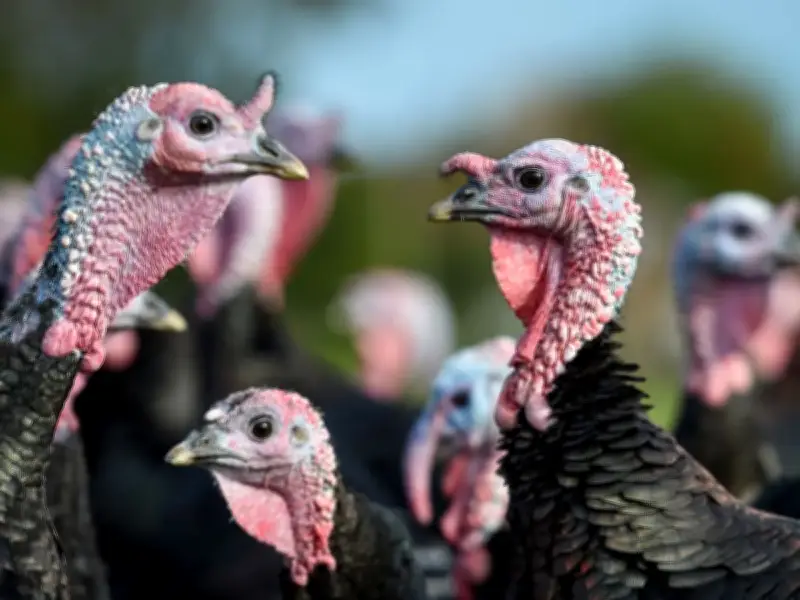
Around 30,000 birds are set to be culled at a farm near Belford, Northumberland, after an outbreak of bird flu, raising fears that supermarket shelves could be empty of turkeys this Christmas.
The outbreak is the first case of the season in England. It was confirmed after 2,000 birds on the farm were killed by the virus. A 3km protection zone and a 10km surveillance zone have been put in place around the farm by the Department for Environment, Food and Rural Affairs.
Risk of Further Cases
Experts say it is “very likely other cases will arise” as the UK enters flu season. Bird flu, also known as Avian flu, is a contagious viral infection caused by influenza. It mainly affects wild aquatic birds and domestic poultry.
Humans can catch it through close contact with infected live or dead birds, their droppings, or contaminated environments. It can also spread from other infected animals like dairy cows or through unpasteurised milk.
Containment Measures
When bird flu is confirmed in a domestic flock, the standard policy in many countries, including the UK and the US, requires the entire flock to be culled to contain the spread of the highly contagious virus.
Northumberland County Councillor Guy Renner-Thompson told the BBC that “luckily” there are no other poultry farms in the protection zone. “If bird flu gets into those, that's ruined them for the year, because that's their main money-making part of the year,” he said.
Impact on Turkey Supply
Paul Hunter, a Professor in Medicine at the University of East Anglia, told the Independent: “If an infection spreads into turkey flocks then there is indeed a real risk that it could reduce turkey availability this year.” He added that good control of the Northumberland outbreak and good hygiene management of turkey flocks should reduce that risk, but noted that “the risk comes from wild birds as well and we cannot control the disease in non farmed birds.”
Councillor Gordon Stewart said: “Wild birds migrating to the UK from mainland Europe during the winter months can carry the disease and where wild birds are allowed to mix with domestic poultry this can lead to the disease spreading to captive birds. Bird keepers should remain alert for any signs of disease, report suspected disease immediately and ensure they are maintaining good biosecurity on their premises.”
Risk to Humans Low
Gill ONeill, Northumberland County Council’s executive director of public health, assured locals that the danger to people is minimal. “The UK Health Security Agency has confirmed that the risk to human health is very low, and the Food Standards Agency has said that Avian flu poses a very low food safety risk for UK consumers and does not affect the consumption of poultry or eggs,” she said.