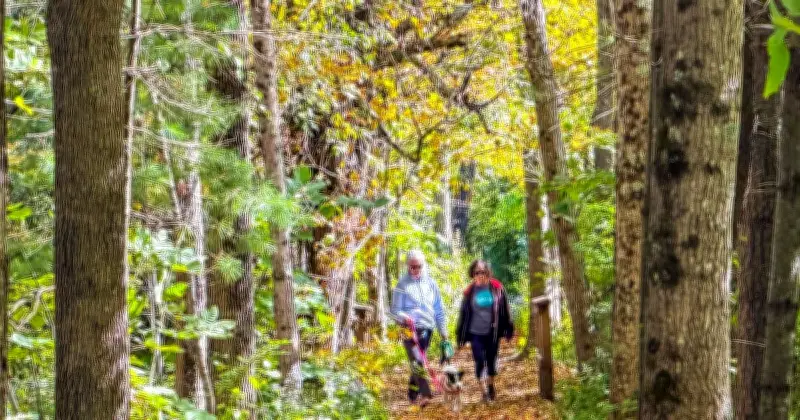
As autumn arrives and families head out for countryside walks, an outdoor expert is urging dog owners and parents to keep a close eye on what young children and pets are doing. The warning comes as wild mushrooms begin to appear, some of which can be deadly if eaten.
Carl J. Borg, founder of Outforia, an online lifestyle publication about the outdoors, said his main rule for foraging is to keep a close eye on dogs and young kids. If your dog scavenges, keep it on a lead and close enough to stop it eating mushrooms while the family pauses to look.
Simple rules for spotting fungi
He said: “It’s easy for everyone to concentrate on the mushroom someone has spotted. Before you crouch down for a closer look, check what your youngest child and your dog are doing.”
For parents, he added: “Children don’t need to recognise a death cap to enjoy looking for fungi. They just need one simple rule for every mushroom they find: leave it where it is and call an adult over.”
“That also takes the pressure off parents to identify everything. You can be interested in something without knowing its name or whether it is edible.”
Identification apps not reliable
It is also important not to use the look of a mushroom as a safety test. The Woodland Trust lists several poisonous species that can be mistaken for edible varieties, including death cap and funeral bell.
Carl said: “On a family spotting walk, keep the same rule for every mushroom. Trying to teach children which ones look safe leaves too much to guesswork.”
Plant identification apps should not be relied upon either. A 2023 study found that after testing three mushroom identification apps, they were not reliable enough on their own to rule out exposure to poisonous mushrooms.
Carl said: “Take a photograph if you want to learn more later, but don’t let a name on your phone turn a sighting into something you take home for dinner. Anyone interested in foraging for food should learn from someone who really knows how to identify fungi.”
What to do in an emergency
If you have young children, explain before setting off that mushrooms stay where they grow and absolutely nothing should be tasted. Children should know to point out mushrooms — never to pick them.
If you suspect your child or dog has eaten a wild mushroom, seek health advice immediately. Do not wait for symptoms to show, as this can take hours or even days to appear. For children, call 999 immediately or go to A&E. Do not induce vomiting or give food or drink. If you have time, collect a sample of what they have eaten, but don’t delay getting help to find one.