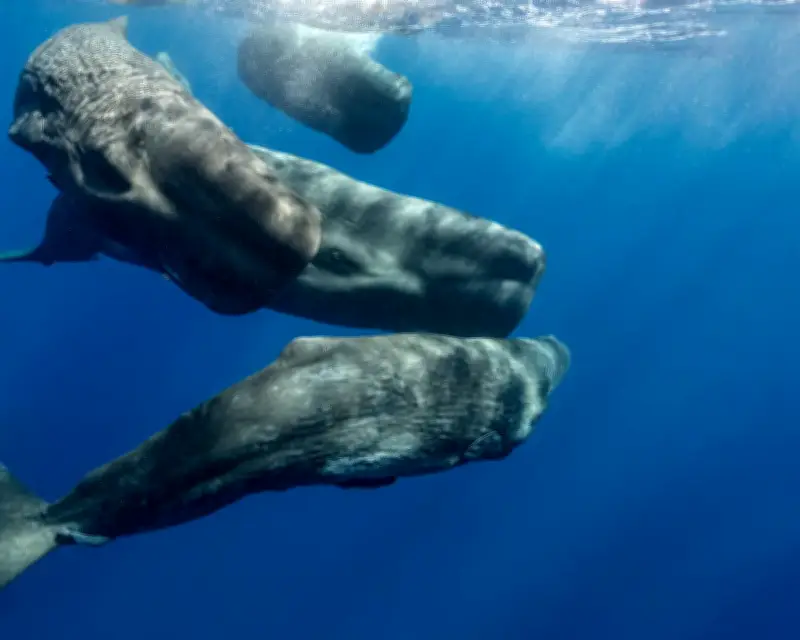
Researchers are using artificial intelligence to decode the complex vocalizations of beluga whales, a breakthrough that could aid in their conservation and provide new insights into the evolution of human language.
Understanding Beluga Communication
Beluga whales, known as the "canaries of the sea" for their wide range of clicks, whistles, and chirps, have long fascinated scientists. A team at the Woods Hole Oceanographic Institution has been recording and analyzing these sounds, using machine learning algorithms to identify patterns and potential meanings.
"This is a major step forward in understanding how these animals communicate," said Dr. Sarah Johnson, lead researcher on the project. "We're beginning to see that their vocalizations are far more complex than we ever imagined."

Conservation and Human Insights
The research could help conservation efforts by enabling scientists to monitor whale populations and their behavior more effectively. By understanding what belugas are "saying," researchers can better assess their needs and threats, such as shipping noise and habitat loss.
Additionally, the study of beluga communication may offer clues about the origins of human language. "These animals have complex social structures and sophisticated vocal abilities, which makes them a valuable model for studying how language might have evolved," added Dr. Johnson.
The team's findings are published in the journal Science Advances and are part of a broader effort to decode animal communication across species.