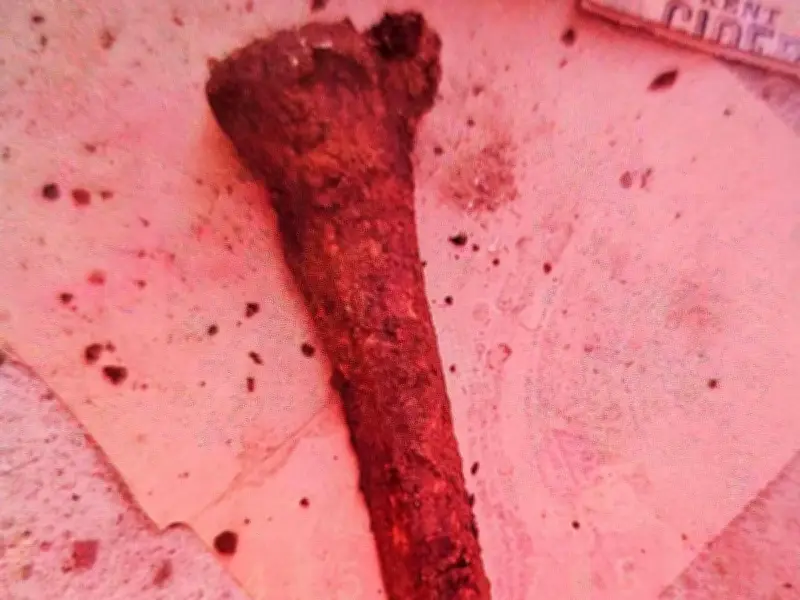
Ross and Claire Sledger were having an extension built at their home in Wye, near Ashford, Kent, when builders discovered human bones on the site. The remains included a femur, two skulls, ribs, part of a pelvis, and fragments of a humerus and finger bones.
Police investigation and excavation
Ten police officers were called to the house in 2019 to investigate what they initially feared could be a murder scene. The couple moved out of their home while police carried out excavation works lasting three days.
Mr Sledger, 49, said: “Builders were doing our extension and Claire called me to say they’ve found some bones and my first thought was it was someone’s pet. A builder had actually found several, but it wasn’t until we saw a femur which raised alarm bells as you could see it was human.”

He added: “By the following day we had 24/7 observation on the site because they thought it could be a murder scene. Police were just sieving top soil, but when you have five police cars outside your house in a little village word did get around quite quickly.”
Anglo-Saxon origins revealed
Six years on, examinations revealed the bones were Anglo-Saxon, dating from the period between the fifth and 11th centuries. A service was held at St Gregory and St Martin Church in the village when the bones — thought to be about 1,000 years old — were laid to rest in the graveyard.
More than 25 people attended the service, which began with the singing of William Blake’s Jerusalem. Reverend Ravi Holy, rector of the church, confirmed the identities of both bodies remain unknown but said villagers should still have the opportunity to pay their respects.
Community reaction and historical context
Reverend Holy said: “Ross and Claire are a lovely couple in the village and it was obviously a shock to them. But once we knew more information and discovered they were Anglo-Saxon bones, we wanted to do something and that’s why we’ve had the service.”
Local historians say Bridge Street had been developed for housing in the 1930s, and a number of skeletons were found during that work. Mrs Sledger, 48, who runs The Sawyers bar in Bridge Street, said their neighbour had also discovered a sword and other bones shortly after the 2019 discovery.
When asked how she feels about the bones being laid to rest, she said: “It’s taken a long time to discover what they were and whether they were going to be archived. It’s been a lovely service and knowing the bones will be in the churchyard is nice so everyone can pay their respects here, rather than at our house.”