The morning was sunlit and the sky the sort of deepest blue dome that makes your heart sing – and all the louder for being at the time of least natural sound.
Autumn's silent season
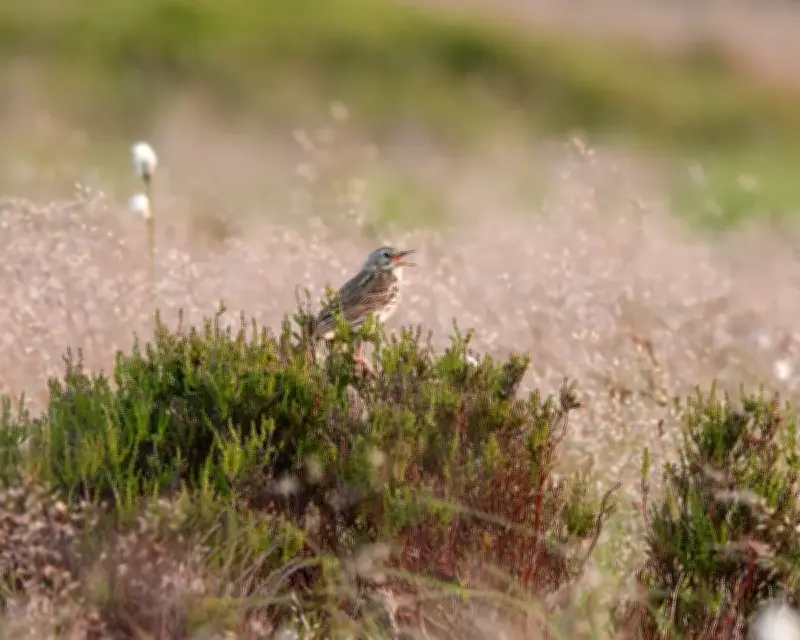
Autumn is the most silent season for birds, but at least the passing meadow pipits could be heard more clearly as they came out of the blue in small numbers and crossed overhead on migration. There is something inherently melancholic about their plaintive piping calls, which seem at one with the mood of upland treeless places.
Meadow pipits also nest here, and post-breeding flocks of the past involved clouds of birds. They were once a default species on every moor, but they have dwindled in line with a 19% national decline, which in turn accords with their global status as a near-threatened species.
Reflections on ecocide
At least today's passage – as the pipits abandon upland areas across England and Scotland, and head south-west on a light southerly – puts one in mind of their glory days. While logging this specific draining away of pipits, the writer recalled recent media coverage of the proposed legislation concerning ecocide. Building on the work of the late Polly Higgins, it is a bill intended to make the destruction of nature illegal.
One can see it perhaps covering cases of massive or deliberate desecration, but isn't the loss of meadow pipits also a kind of ecocide? As indeed is the slow haemorrhage of 3.6 billion breeding birds from the northern hemisphere. How could one intervene with legislation in what is essentially a process unfolding everywhere, every single day?
A brighter side
At the heart of the dilemma is surely the deeper challenge that life is an endless unfolding, while anything expressed through language is necessarily fixed and categorical – in short, laws apply to events, while ecocide derives from the state of mind of an entire society.
It was too blue today to be down. Along with the meadow pipits of Combs Moss, the writer saw ravens, peregrines, red kites, marsh harriers and buzzards, all of which species have increased in numbers in Britain this century.