
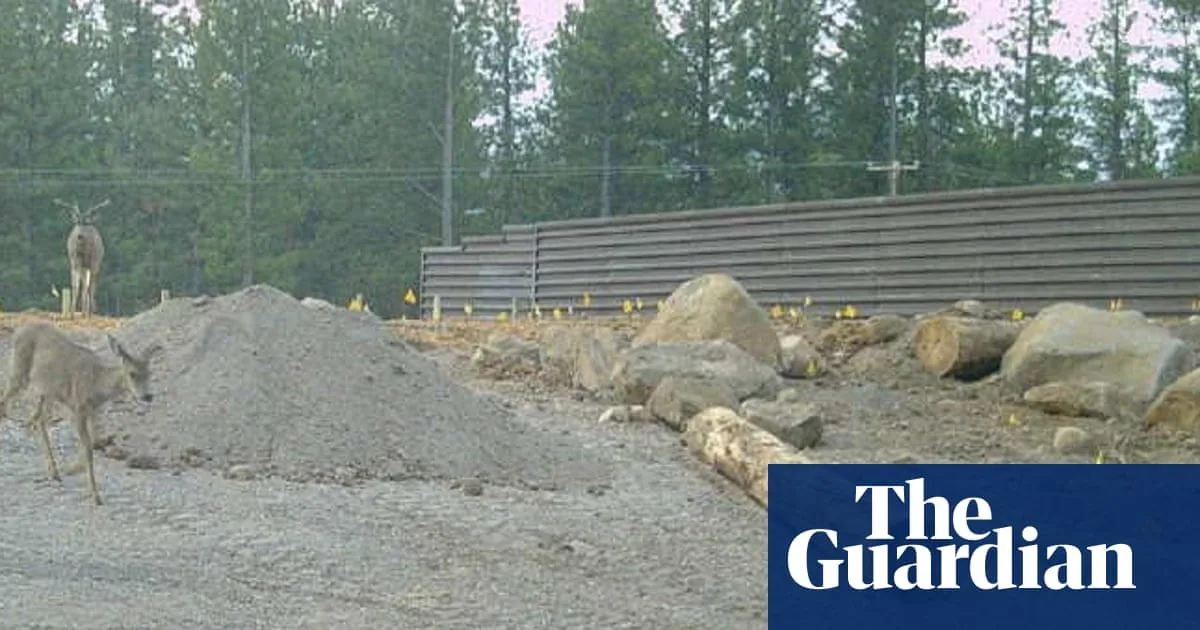
A trio of mule deer have been spotted using a not-quite-finished $20m wildlife bridge over Route 97 in Siskiyou County, California, marking an early success for the state's first major highway wildlife crossing. The California Department of Transportation (Caltrans) confirmed that camera traps captured images of the deer crossing the structure within the last few days.
The bridge, which includes accompanying fencing, is designed to improve driver safety and reduce mortality for migrating mule deer, elk, and other species. Fraser Shilling, director of the Road Ecology Center at the University of California, Davis, described it as 'our first over-crossing laboratory in California,' providing a structure to learn how to make future crossings better.
Caltrans District Two posted on Facebook that, in addition to deer, a bobcat and other wildlife have also been spotted using the bridge. The bridge itself is complete, with only final touches remaining on adjacent fencing needed to funnel wildlife toward the crossing. Shilling emphasised that 'wildlife crossings by themselves do not stop roadkill; it’s the fencing associated with them that stops roadkill.'
A 2024 report by the Road Ecology Centre, co-authored by Shilling, described vehicle crashes into wildlife as 'a damaging and preventable natural disaster.' It noted that California drivers kill nearly 50,000 mule deer annually—roughly 10% of the state’s deer herd—along with nearly 100 mountain lions and thousands of other animals each year. Between 2015 and 2020, some 50 deer and 16 elk died at the crossing site, according to Caltrans.
More crossings are scheduled to open soon, including the Wallis Annenberg wildlife crossing in southern California, which will become the world's largest after its scheduled opening at the end of the year, spanning the 10-lane 101 freeway. Shilling praised Caltrans for using its own funds to implement the pioneering crossing, calling the staff 'heroic' for taking bold steps to make roads safer and improve wildlife populations.




