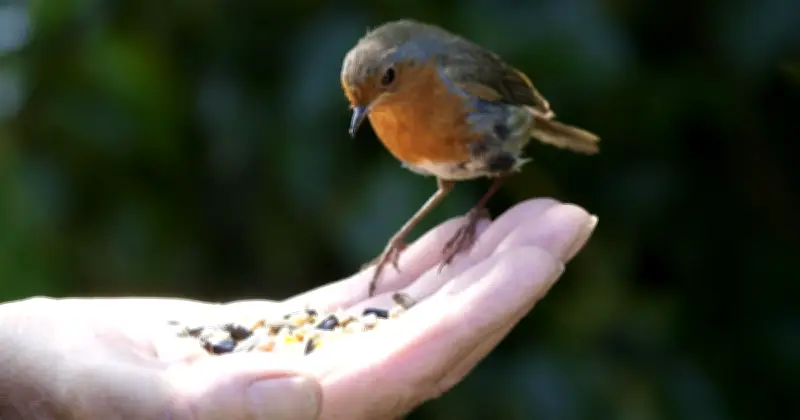
British gardens can prove invaluable for robins during the cold autumn and winter months, according to bird experts from the British Trust for Ornithology (BTO).
Robins remain active as they defend their territories and seek shelter during autumn, and ornithologist Susan Jones from the BTO revealed the foods her garden robins "love". She explained that robins have quite a varied diet, "so they will readily come into our gardens to see what's on offer".
Ivy and brambles provide food and shelter
Fruit and berries, in particular, form a massive part of a robin's diet, especially during autumn and winter when worms become scarce. The bird expert explained: "My garden robins love Ivy and Brambles, which provide a feast of berries in the autumn and winter and nesting opportunities in the spring, as well as cover from the weather and predators."
Jon Carter, a bird expert from BTO, agreed and added that robins benefit greatly from gardeners' love of feeding birds, especially when it comes to fruits and berries. Ivy and brambles are not only great additions to the birds' diets, but can also provide shelter.
Messy corners attract robins
Robins have a preference for "slightly scrubby habitats" in gardens, so "any wild and well vegetated corners will often be attractive to them". Jon explained that British gardens "can prove invaluable for these hardy little birds in the depths of winter, as we provide shelter, water and food".
Susan Jones also recommended that gardeners provide "soaked mealworms or suet pellets scattered on the ground" as robins love these, but warned to avoid doing this if you have dogs or visiting hedgehogs. Other ways to attract birds into your garden are "to keep some areas a little bit messy, and avoid using chemicals".
Feeding advice and hygiene
She added: "Blackbirds love to forage in amongst fallen leaves, and Goldfinches will feed on thistle and Teasel seeds right through the winter months (so don't cut them too early!)."
"Thanks to BTO Garden BirdWatchers, we know that it is quite normal for there to appear to be fewer birds around in the late summer and early autumn, as there is plentiful natural food available to them outside gardens. Following the updated feeding advice from the RSPB, published earlier this year, we recommend that bird lovers provide seeds and peanuts in hanging feeders for their birds again from November 1 to April 30."
"However, it should be stressed that maintaining good feeder hygiene is vital to minimise the risk of spreading diseases. Similarly, bird baths and water for drinking should be cleaned regularly and filled with fresh water to reduce the risk of disease transmission."