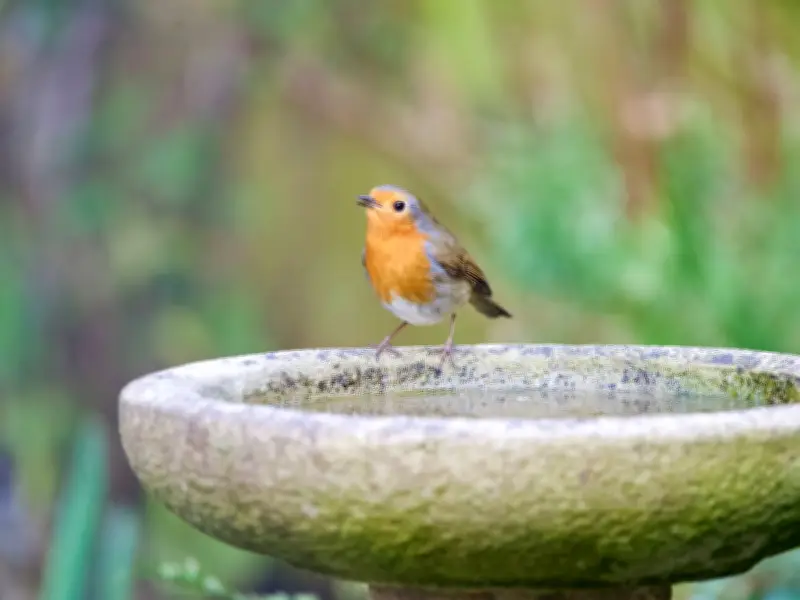
If your garden birdbath is failing to attract birds, the water may be too deep. Smaller species such as robins, bluetits, and goldfinches require a depth of 2cm or less to wade safely, while larger birds like pigeons can manage up to 5cm.
Ideal Depth for Birdbaths
According to the Express, most stone birdbaths are too deep by default. The RSPB says: 'What birds really want from a bird bath is a wide, safe and shallow puddle with a rock or two for perching on.' To accommodate both large and small birds, aim for a graduated depth – shallow at the edges and deeper towards the centre, not exceeding 5cm in the middle.
A quick fix for a too-deep birdbath is to place a flat stone or a couple of pebbles along the edge, roughly 2cm in thickness. This gives smaller birds a safe perch while the centre remains suitable for larger birds. Use stones made from granite or slate, as they don't deteriorate or contaminate the water.
Ensuring Stability
Before adding stones, clean them thoroughly and ensure they are stable and do not shift when a bird lands on them. Any movement will frighten birds and may discourage them from returning. Another method is to add pea gravel to the bottom, providing varying water depths for bathing and drinking.
For extra appeal, All About Birds suggests providing dripping water: 'Many birds find the sight and sound of moving water irresistible.' You can use a commercial dripper or make one by punching a tiny hole in a bucket, filling it with water, and hanging it above the birdbath.