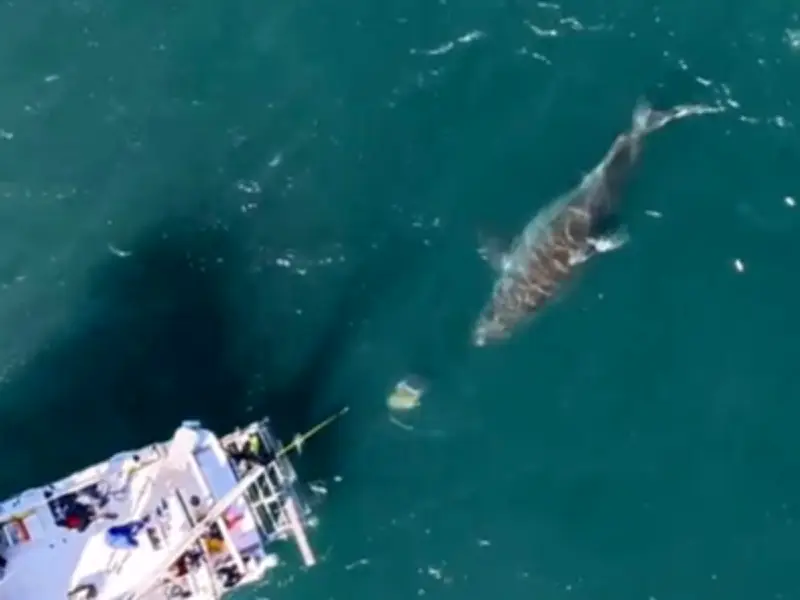
A team of marine biologists tracking a formidable great white shark known as Big Rose has been outsmarted by the creature, which is currently swimming close to the coast of the US and Canada. The 20ft (6m) female shark, named for a rose-shaped mark on her fin, is considered one of the largest ever to swim in the Atlantic.
Elusive predator spotted near Mud Island
Dr Neil Hammerschlag, an experienced marine biologist, is working to track Big Rose down. His efforts will be revealed as part of American TV's Shark Week coverage. According to reports, Hammerschlag came face to face with the shark while hunting for great whites off the coast of Nova Scotia, near a small area known locally as Mud Island in the North Atlantic.
Using massive bluefin tuna as bait, researchers managed to attract and tag several sharks measuring well over 10ft, but Big Rose remained elusive despite being believed to be in the area. After hours of searching, the shark finally emerged, swimming near the boat and displaying her iconic rose-shaped fin marking.
Tracking device attempt fails
Dr Hammerschlag and his team were unable to attract the 50-year-old shark closer to the vessel to plant a tracking device, even after using several more tuna carcasses. The wily great white swam away without a trace. Marine biologists present were able to estimate her size: about 3 tonnes, around 20ft in length and 6ft in width.
No shark has ever been officially measured at longer than 20ft, meaning Big Rose could be the biggest ever seen by humans. The full episode is due to air tonight in the US as part of Warner Brothers' Shark Week at 10pm local time (2am Monday) on Discovery.