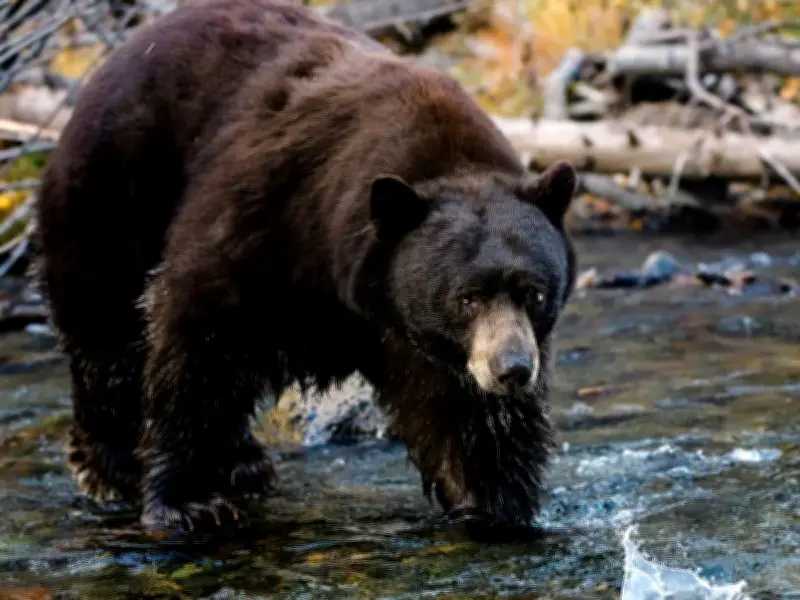
A 150-pound black bear stormed into a holiday cottage in rural Alaska in 1992, mauling a woman to death and eating her for “no apparent reason,” according to contemporary reports.
Darcy Staver, 33, was attacked in the early hours of July 8, 1992, while staying at a cabin outside Glen Allen with her husband, Michael, an army captain. The couple had travelled from Fort William, Washington, for a holiday.
They were still in bed when they heard a loud rustling that turned into cracking, and saw the bear crashing through the window, according to the Anchorage Daily News.

Escape to the roof
The couple fled through the front door, slammed it shut, and climbed onto the roof, but the bear burst through the door and did not give up its pursuit. Michael fired several warning shots from his 22-calibre pistol, but they had no effect. Realising the weapon was not strong enough to kill the bear, he decided to leave the roof and head to his motorboat to fetch help from neighbours.
When Michael returned with a neighbour, Darcy was nowhere to be seen. They searched frantically and eventually found her lying motionless around the back of the cabin, her stomach split open and covered in blood. Michael watched in horror as the bear ate his wife with a bloody maw, then shot it dead with his rifle.
Investigation and aftermath
When state troopers arrived, an investigation suggested the bear had climbed a tree onto the next-door cabin to reach Darcy. Her defensive wounds indicated she had fought back. Bears often do not kill their prey before eating it, instead beginning to consume it while it is still alive without breaking its neck.
Fish and wildlife game biologists were baffled by the 15-year-old bear’s behaviour, saying it showed no signs of starvation or rabies, according to the Spokane Chronicle. Decades later, experts still cannot explain what drove the bear to attack.
Just two days after Darcy’s death, a bear killed a six-year-old boy, and Alaskans began shooting bears on sight. State wildlife biologists have since tried to contextualise such attacks, with Alaska’s Fish and Game department’s Cathy Harms, an Interior spokeswoman, saying black bear maulings are “unusual” but “not unprecedented.”
Canadian scientist Stephen Herrero, a specialist in bear attacks, theorised that Alaskan black bears may view humans as potential prey, unlike other bears. He said: “Together these incidents confirm the somewhat controversial conclusion reached in 1985 that black bears can on rare occasions attempt to or even successfully prey on people.” He added: “This type of incident continues to cluster geographically in . . . rural and remote areas, suggesting that many potentially predacious black bears have had little exposure to human beings, hence little opportunity for bears showing this tendency to have been killed by man.”