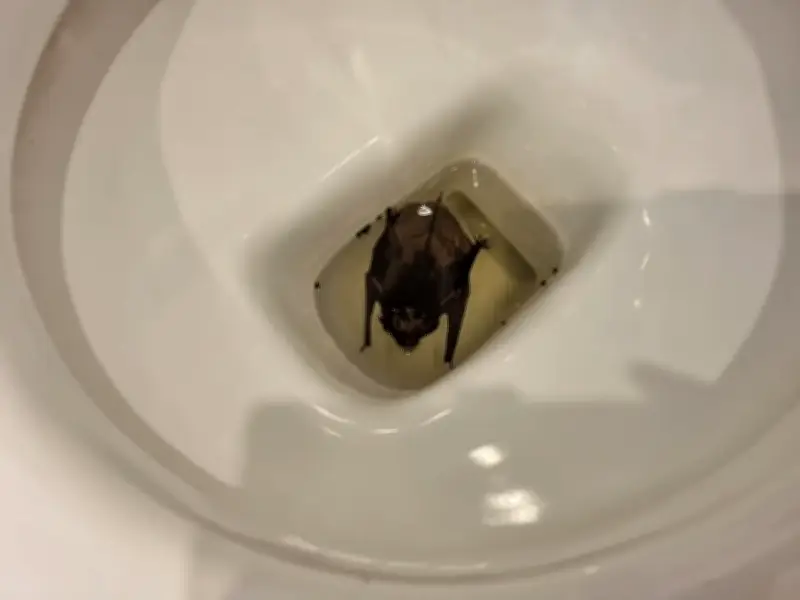
A woman in Sussex made an unusual discovery during the UK heatwave when she found a bat floating in her toilet. The animal, later nicknamed Louis, had flown in through an open window, likely searching for water.
Rescue and Recovery
Dehydrated and weakened, the bat was carefully rescued using a garden trowel and dried off. The Sussex Wildlife Trust's Bluesky channel directed the finder to expert advice, and she contacted Sussex Bat Group volunteers.
The woman, who did not wish to be named, said: "I've learnt so much about bats from this wonderful and unsought encounter with a beautiful wild creature, including that so many are dehydrated and that the biggest single cause of injury is cats, who lurk outside their roosting places. And that they can find refuge in the tiniest gaps under hung tiles and in other nooks and crannies on older buildings."

Care and Release
Louis was taken into the care of Sussex Bat Hospital's Amanda Millar, who confirmed he was a serotine, one of the UK's largest bat species. Though thin and exhausted on arrival, a week of rest and a steady diet of mealworms restored him to full health, and a test flight proved he was fit to return home.
At dusk, Louis was driven back to the garden where he was found and released. He flew off over the honeysuckle and into the night, with a bat later spotted flitting across the darkening sky, possibly Louis finding his way home.
Advice and Background
Sussex Wildlife Trust is reminding residents that summer heatwaves can leave bats dehydrated and searching for water in unexpected places. Anyone who finds a bat in distress is encouraged to contact their local Bat Group for advice.
According to the UK Bat Conservation Trust, the serotine is one of the first bats to appear in the evening, often when it is still somewhat light outside. It has a wingspan of 32cm to 38cm and usually hunts within 2km of where it roosts, but may forage up to 6km further afield. After catching prey like a large beetle, the serotine will slowly fly around, chewing on its prey and dropping the wing cases and legs. It tends to fly at around tree-top height, 10m or so, often close to vegetation. Sometimes the bats will 'flop' with their wings outstretched onto foliage to catch large insects and will feed around street lamps, and they have even been known to catch prey from the ground. They mainly roost in buildings and are hardly ever found roosting in trees.