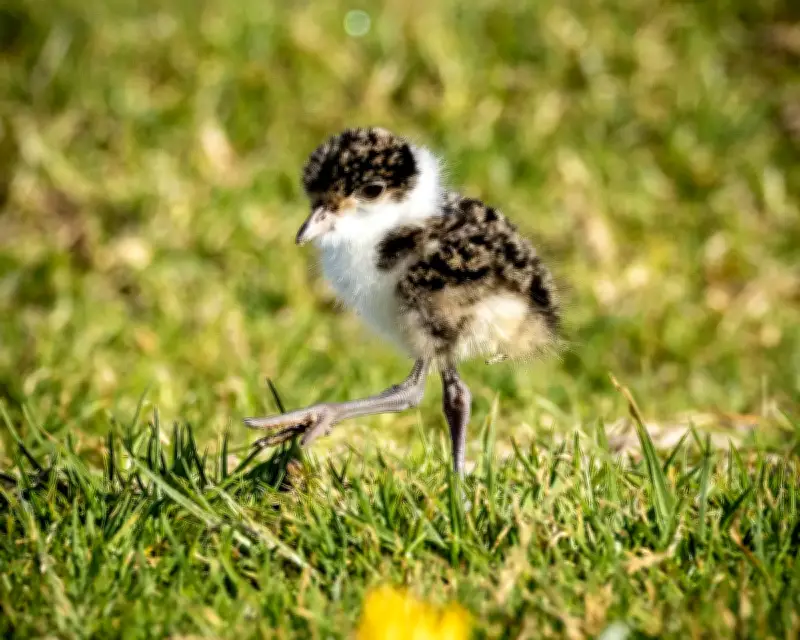
In early September, two spur-winged plover chicks hatched on a headland above a popular tidal pool in Maroubra, in Sydney's south-east. They hit the ground running, scurrying around on their disproportionately long, stilt-like legs shortly after emerging from their speckled brown eggs. They looked like fluffy brown and white cotton balls that could blow away in the wind.
The chicks' parents, adorned with black crowns and bright yellow masks on either side of their bright yellow beaks, were always close by and always on guard. They provided protection from the cold, letting their free-roaming chicks tuck themselves under their fluffy white breasts for warmth. Like all good plover parents, they took turns swooping any intruder – person, dog or drone – who ignored their warning call and came too close, a loud “kekekekekekekek”.
Urban Nesters Facing Many Risks
Plovers, otherwise known as masked lapwings, are common throughout northern, central and eastern Australia. These long-legged birds resembling masked superheroes typically inhabit mudflats, marshes, beaches and grasslands, but they're often seen in urban areas too. They are sometimes referred to as spur-winged plovers due to each wing being armed with a yellow spur, which they use when diving at intruders during breeding season.
Both sexes share the building of the nest, which is a very shallow scoop in the ground away from ground cover where they also both take turns sitting on their precious eggs. In urban areas, these shallow homes can be found on playing fields, or median strips, or sometimes the roofs of buildings.
A Community's Devotion and Concern
Many people despise these birds for their apparent mix of stupidity and stubbornness, insisting on violently defending the nests they've created in ridiculously vulnerable areas. Indeed, several pedestrians swore and shouted at the plovers on the headland when they swooped. But the writer admired how fiercely and fearlessly they protected their family and became devoted to them.
The birds lived a short walk from the writer's apartment, and every morning and evening they wandered down to check on how the chicks were faring. Amid all of the bleak news of mass bird deaths caused by the arrival of H5N1 bird flu in Australia, they were a source of much-needed hope. Focusing on them, even if just for a few minutes each day before and after work, made the writer feel just a little less despairing.
Repeated Tragedy for the Plover Family
This was the third consecutive season the parents had nested in this place. With unlimited ocean views and open grassland, it's a fine spot to raise a family, but it also comes with many risks for vulnerable chicks: dogs, cats, foxes, resident birds of prey, cars, and steep cliffs that drop into the ocean. The last two breeding seasons ended in tragedy, with all of the chicks dying, some squished on the nearby road by speeding cars only days before they might have taken flight.
As happened during the last two unsuccessful breeding seasons, there were several other locals watching over the family this year, reminding people to keep their dogs leashed to give the chicks the best chance of survival. Volunteers from the local branch of Wires, the largest wildlife rescue organisation in Australia, placed signs around the perimeter of the nesting site to reiterate the message and warn of heavy fines for harming native wildlife. Some people listened, but many did not.
Loss and a Call for Harmony
About a week after first spotting the chicks, the writer walked down to check on them one morning and could not find them at their usual spot. They weren't there that evening, nor the following day. A local Wires volunteer had not seen the chicks in the past few days, nor had anyone else she knew who was keeping watch over them. “I think we've lost them again,” she said. The parents had disappeared from the headland too.
Nonhuman animals at the very least respond to the death of a companion or offspring. Humpback whales, for example, have recently been observed caring for a deceased newborn calf off Australia's Gold Coast. Orcas have been seen carrying their dead calves through the ocean for weeks. Elephants visit the bones of dead family members. Crows gather around the corpse of one of their flock, in a funeral-like ritual.
The parents are now back at the headland, where the Wires signs still stand like solemn grave markers. Without chicks to protect, they have become shy and timid again, moving away from anyone who walks by rather than swooping and shrieking as they once did. The writer wonders why they don't learn to go elsewhere, given the repeated tragedies they've experienced here, but perhaps it's better to wonder about how we might learn to live more harmoniously with them, as well as all of the other animals we share our suburbs and cities with. The writer will show up to check on any chicks that might hatch in future, however futile it seems.