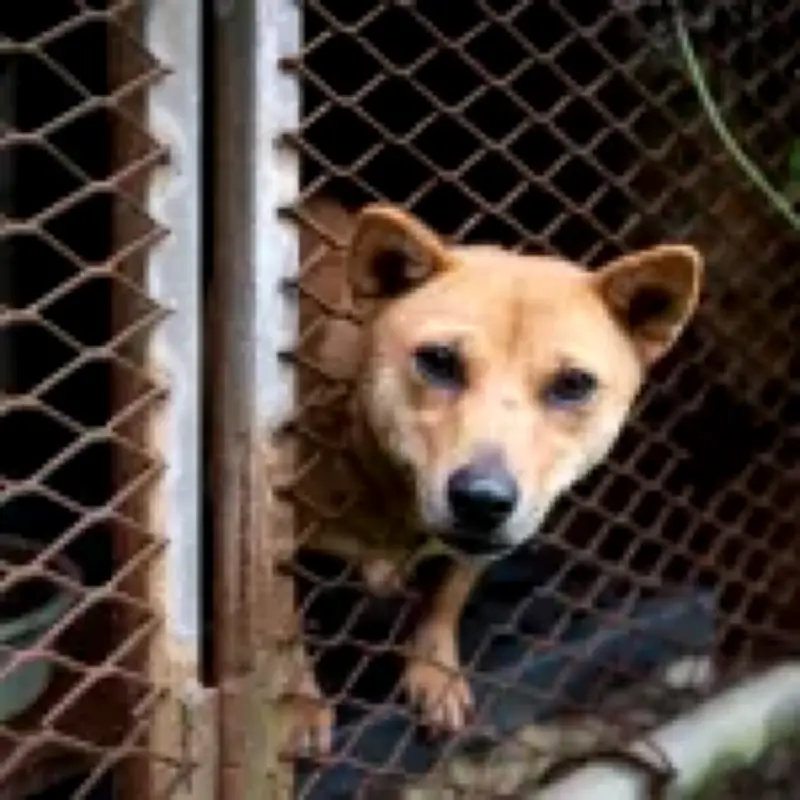
Humane World for Animals has rescued 70 dogs from a dog meat farm in Gangjin, South Korea, in what the organisation calls its final large-scale rescue mission before a nationwide ban takes effect.
Sangkyung Lee, campaign manager at Humane World for Animals Korea, described the rescue as both rewarding and bittersweet. "It was an amazing feeling to get these dogs out of their filthy cages, never to be confined ever again," he told Metro. "At the same time, it's heartbreaking to know that these dogs are among the last survivors rescued from this cruel industry."
The Gangjin farm's grim history
The farm, located between rice paddies on South Korea's southwestern coast, operated for 20 years and once reared 1,000 dogs. The owner reportedly drove around the area with a loudspeaker, asking locals to sell him their unwanted pets. Hundreds of dogs were sold to slaughterhouses each year for electrocution, then supplied to restaurants and markets.
Wendy Higgins, director of international media relations at Humane World for Animals, described the scene: "No one would ever have guessed that if you drove down a track a little way, it opened up into a scene of utter hell for dogs."
Rescue details and adoption plans
The owner agreed to relinquish the remaining dogs and vowed not to sell dog meat again. Rescuers found a German shepherd, corgi mixes, a husky mix, spitz mixes, and Korean Jindos. At the end of one row of cages was a dog skeleton, with collars, syringes, and jaw bones littering the floor. Large vats of rotting duck heads were also found, intended as feed.
The rescued dogs will be flown to the US and Canada for adoption. Higgins added: "You can't help but think, I wish we had discovered this place sooner and we could have saved more lives. That thought always haunts me."
South Korea's dog meat ban
Dog meat farms will be illegal from 2027. South Korea's National Assembly passed a ban in 2024, joining Hong Kong, India, and Thailand. Since then, eight in ten dog farms have closed, but only 0.3% of dogs on meat farms have been rescued. Anyone who butchers a dog faces three years in prison or a fine of about £16,000.
Julie Sanders, director of End Dog and Cat Meat at Humane World for Animals, expects a few farms to remain after the ban. "But I feel confident in the authorities' commitment to finding them and shutting them down," she said. "There is a real sense of momentum to get rid of this industry and embrace dogs as friends, not food."
Higgins hopes other governments will follow South Korea's lead. "But to us they are everything," she said. "They are Prince and Coco, Nara, Lola, Ranger, Julie, Patches, Oreo; their lives matter. It makes me cry to think of the awful deaths they would have had if we had not saved them."